Restaurateurs in Atlanta are usually willing to share tips and tricks with their patrons. Some of the city’s premier chefs and bartenders take it a step further, offering cooking and mixology classes for audiences of all sizes and skill sets.
Today’s classes run the gamut – from teaching the basics to behind-the-scenes experiences creating gourmet meals. They can be found across the culinary scene, in restaurants, bars, special kitchen venues – even private homes. The classes are fun for attendees, but the chefs and bartenders that share their knowledge and expertise are also reaping benefits. While the classes can certainly open a new revenue stream and support brand building, they can also strengthen relationships with existing customers and bring in new ones to increase business and build community.
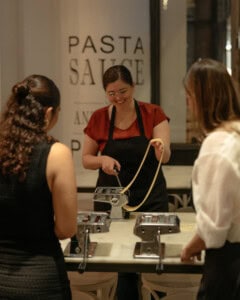 Photo credit: Courtesy of Oliva Restaurant Group – Attendees at Bellina Alimentari’s Pasta 101 class can advance to the next-level filled pasta class.
Learning from the Experts
Chef Tal Baum, owner of Oliva Restaurant Group, launched pasta-making classes at her Italian-inspired restaurant Bellina Alimentari at Ponce City Market a decade ago. “Our pasta classes have been part of Bellina’s DNA from the very beginning,” she says. “Sharing Italian culinary traditions with the community is at the heart of what we do, and guests love learning directly from chefs and feeling part of the kitchen.”
The classes are held several times a week and feature a basic pasta 101 class as well as a filled pasta class. “A great way is to start is by taking our pasta 101 class and then advance to our filled pasta class,” says Baum. Classes are taught by instructors who specialize in pasta making and are usually capped at 12 guests, she adds, “to ensure an intimate, hands-on experience.”
As a special add-on, after each class, guests enjoy a small tasting of the handmade pasta prepared daily at Bellina. “Each participant also takes home their creation, plus they receive a 10% discount in our in-store market on items like sauces, oils, and cheeses,” says Baum.
Over the years, Baum says she has refined the flow of the classes “to keep them fun, hands-on and approachable, while ensuring guests leave with both skills and inspiration.”
Variety is on the Menu
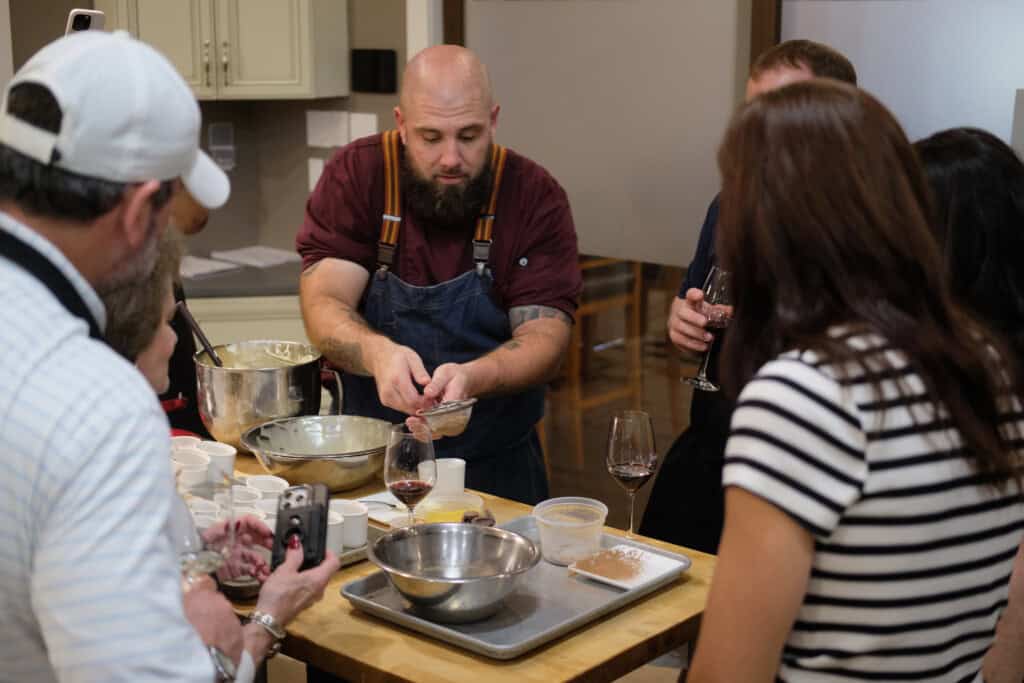
For a broader range of classes, Vino Venue in Dunwoody has become a go-to for cooking enthusiasts. The restaurant and wine bar’s regularly scheduled classes include learning basic knife skills and techniques like braising, to preparing balanced meals that meet dietary restrictions. They even offer daytime classes that cover practical skills, like frying chicken and baking biscuits.
Chef Patric Good says the classes, which began in 2013, have become more focused since he joined the staff nine years ago. In addition to including gluten-free, dairy-free, vegan and vegetarian options, he says, “We try to offer food from all over the world, so our cooking classes reflect the wine that we carry.”
The classes are taught in Vino Venue’s state-of-the art demonstration kitchen by instructors specializing in Italian, French, Middle Eastern and Japanese cuisine, as well as some regional favorites and seafood classics. Two certified sommeliers are also on hand to pair wines with the meals each class prepares. “We learned over the years that 14 is the sweet spot for the number of people, so the chef can give personalized attention,” says Good.
The classes are a natural way to create positive word-of-mouth advertising, Good says, especially using social media. “One of the things that helps a lot is when people in the classes take pictures and share them. We’ve noticed that we will get more views from people who have a very healthy relationship with social media. When they put it out there, then it leads to more views for us in general.”
Shaken or Stirred?
Award winning Atlanta restaurant Gunshow, has offered mixology classes off-and-on since 2015. Led by Gunshow’s Beverage Director Jeramie Eubanks and sister restaurant Nàdair’s bar lead Eric Simpkins, each two-hour class is limited to 34 people.
“The way the classes are set up has changed over the years,” says Eubanks. “For 2025, I taught three classes, and Eric taught the other three. We got together with Marco Shaw, president of Red Beard Restaurants, and decided on the class concepts,” he adds, which feature six themes, are held on Sunday afternoons and cost $75 per person. “That gives every guest three cocktails, food, a pamphlet with all the class material, a Gunshow-branded pint glass and time to ask as many questions as you’d like,” Eubanks explained.
Over the years, Eubanks says his approach to the teaching the classes has evolved. “I’ve found that an interactive style works best in these class settings. When I demonstrate how to build cocktails, I like to invite guests to join me so I can walk them through the process of properly building and shaking, or stirring, a drink. This hands-on experience not only feels engaging but also helps guests feel more comfortable asking questions and becoming part of the process,” he adds.
One of the newest cocktail classes recently launched at Two Urban Licks on Atlanta’s Beltline. Senior Operations Manager Borna Abdullahi, who credits events coordinator Felicia Azuero for planning and executing the hands-on “Mini Mixology” classes, says, “We have a large offering of wonderful spirits, so we thought it would be a cool way to bring some of our locals and guests in and show them a couple of things that we like to do here.”
Planned as a monthly event, the classes are taught by the restaurant’s senior bartenders, allowing them to bring something different to each session. For the first class, says Abdullahi, “We kept it to more classic cocktail theme featuring a daiquiri, a French 75 and then a riff on an old fashioned with tequila.” The thought, he says was to “keep things easy for the guests, but also fun.”
Each class is $75 and includes small bites paired with the cocktails and take-home recipe cards. Guests can upgrade to a private VIP experience that includes a bonus cocktail demonstration, extra bites, a Q&A with the bartender and a Take Home Bar Kit. The take home items are branded, so each participant takes home something that continually reminds them of their experience, encouraging them to return.
As for the first class, Azuero says, “The smaller group actually created a more intimate environment where guests had plenty of one-on-one time to practice and ask questions.” While she says there are always little ways to refine the class, “It was clear that everyone enjoyed the experience.”



