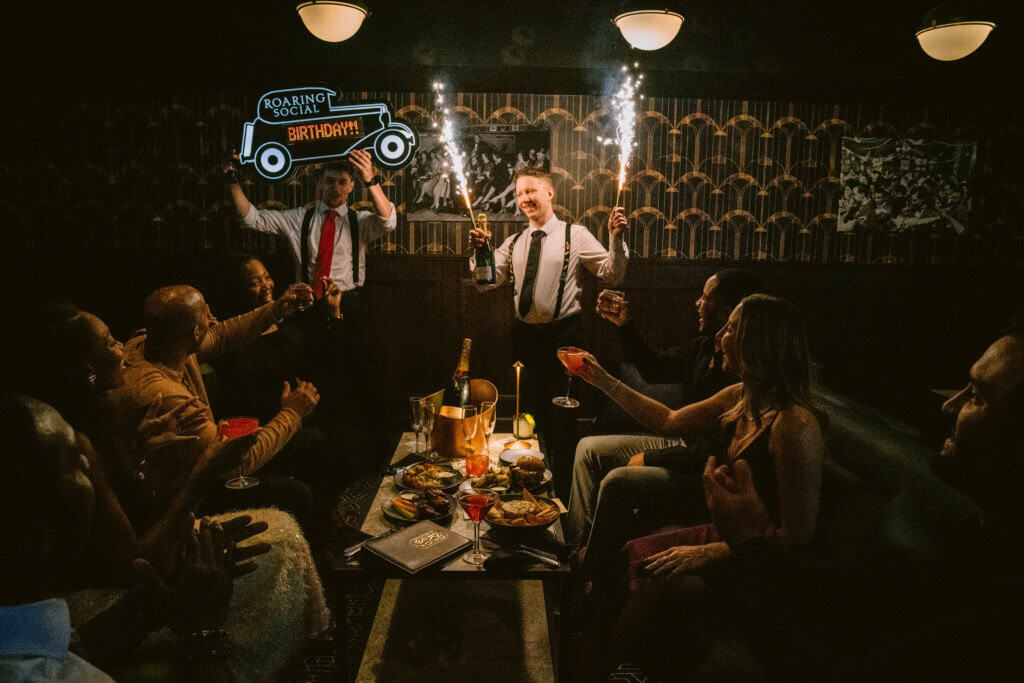
The concept of “eatertainment” isn’t new, especially for today’s adult generation. Even before Dave & Buster’s, there were McDonald’s PlayPlaces and Chuck E. Cheese, venues that combine dining with entertainment or activities. There isn’t a date night more classic than dinner and a movie, nor one as wholesome as a light bite followed by mini golf.
Food and activities have always gone hand in hand as ways for people to connect, so it’s no surprise that the combination has evolved into something bigger, flashier and with higher expectations in the age of digital sharing. In fact, in a recent story published by the growth capital fund Emerging, Angevin & Co. CEO Robert Thompson called eatertainment “the most disruptive force in the [restaurant] industry since the launch of fast casual.”
All of this comes down to building multiple touchpoints for connection. Joshua Rossmeisl, founder and Chief Vision Officer of Your 3rd Spot, uses connection as his brand’s north star, remembering at all turns that “our purpose is to connect people and build community.” After 31 years in hospitality, 20 of them in entertainment, he’s found that this is the secret sauce, and the reason why social entertainment is here to stay.
Brian Harper, Chief Operating Officer at Competitive Social Ventures — the Atlanta-based group behind Alpharetta and now Decatur’s Roaring Social, as well as two Fairway Socials and Pickle and Social — elaborates, noting, “Competition and connection go hand in hand. When you layer in food and beverage, it transforms from just a game to a shared experience.”
 Justin Amick of Painted Hospitality
The president and CEO of Painted Hospitality, Justin Amick, agrees with that to the extent of trademarking the portmanteau “compeatery™” to describe his concepts The Painted Pin, The Painted Duck, Painted Pickle and Painted Park.
However, techy games, social competition and a menu of bar food staples aren’t enough to foster a successful dine-in business. It’s easy enough for customers to ignore the entertainment if it’s not attention-grabbing enough or to make it a two-stop night if the food isn’t up to snuff. So how do you find the balance? How do you maintain both an identity as an entertainment venue and as a legitimate dining destination?
What Comes First—the Food or the Fun?
For Harper, it’s a refusal to compromise the culinary program. He says, “Food isn’t an afterthought; it’s a critical part of the experience. Entertainment may catch someone’s eye, but the food and beverage program should be designed to stand on its own.”
Amick agrees, saying, “We’re restaurateurs in the entertainment space. That’s our background and edge. The fun is the lure and x-factor that draws patrons to our concepts and keeps them there … but the food and drinks are the focus that keeps them coming back.”
Even at Your 3rd Spot, where entertainment represents about 45 percent of their profits, Rossmeisl says, “The food and beverage program is the heartbeat of the business.”
However, this pairing of activity with a meal also means the menu must be designed with the entertainment or activity in mind. For example, guests may want to leave their refreshments at their tables, or they may take them onto the game floor with them. For that reason, the food must be “flexible, so guests can enjoy it while playing, then return to it seamlessly,” Harper says. “A menu for motion” is how Amick poetically puts it.
However, this pairing of activity with a meal also means the menu must be designed with the entertainment or activity in mind. For example, guests may want to leave their refreshments at their tables, or they may take them onto the game floor with them. For that reason, the food must be “flexible, so guests can enjoy it while playing, then return to it seamlessly,” Harper says. “A menu for motion” is how Amick poetically puts it.
Rossmeisl recommends, “No sides, no dishes that slow down the night.” He also recommends keeping the core of the menu tight and disciplined. “We never have more than 20 savory plates, built for sharing, quick execution and consistency. Every dish is approachable, seasonal and guided by guest data,” he says.
What About the Drinks?
Your 3rd Spot maintains a consistent approach for its drinks, Rossmeisl reports. “Honest pours, draft cocktails for speed, a zero-proof program taken as seriously as our spirits, smaller brands with a story worth telling.” A well-considered drink program built for speed and consistency carries a large share of the venue’s revenue, he says, as “nearly every guest adds a drink once they’re inside.”
Meanwhile, revenue at the Competitive Social Ventures tends to be a 50/50 split between food and drink, with variances “depending on seasonality and whether we’re serving transient guests or event-driven groups.” Some of the group’s concepts, like Roaring Social, offer more seating and live performances versus active play, but Harper assures that this is intentional as their focus is to deliver a more complete guest experience.
At Amick’s Painted Hospitality, “We’re more beverage-focused concepts with amazing food—not just restaurants with amazing drinks.” For that reason, he says, they “play the hits: signature and classic cocktails, local and craft beer, artisanal wines by the glass and bottle.” With complimentary interactive pub games and board games at Painted Park, there’s an open invitation to gather and order another round.
Is Eatertainment Here to Stay?
“I believe we are much closer to the beginning stage of social entertainment versus the peak,” Harper says. “While industry titans like Topgolf have been around for 20+ years, the spawn-off of new concepts is just getting started.”
Opening an eatertainment outlet is no small feat, however, admits Rossmeisl. “It’s capital-intensive on the front end,” he explains, since there are numerous variables to consider, as play can mean something different to everyone.
For instance, someone may come for pickleball and a beer, another for dinner with friends, another for live music, Harper points out. Some adults might want to have childlike fun sans children; others might want to enjoy a nice meal and drink as their kids wear themselves out. Offering a wide spread of recreation across venues, as Painted Hospitality does, requires a lot of strategy as well as investment. It will require even more of both in the future, as consumers get spoiled by the competition between compeateries.
However, Amick says, “Adding an eatertainment attraction such as bowling, duckpin bowling or pickleball can create another lucrative revenue stream for a restaurant.” Rossmeisl confirms, “Once curated and installed, the return is clear.”
Because of where we are on the trend curve, Harper admits, “There will [likely] be an oversaturation period.” However, he insists, “Those who create a brand identity and focus on hospitality and community will survive. Hospitality has to stay at the core,” he emphasizes. “It’s the food and service that elevate the play into something memorable.”
 Su-Jit Lin has deep roots in the food industry, having grown up working in her family’s restaurant kitchen, serving in casual and fine dining service, and now, writing about it from her home in Atlanta. Her work has appeared in Eater, Serious Eats, Epicurious, EatingWell, The Spruce Eats, Kitchn, Southern Living, Reader’s Digest, and more, despite the best and most distracting efforts of her dog, Sable Sugarpig.



