When Manhattan restaurant Eleven Madison Park, which had transitioned to an all-vegan menu in 2021, reversed course earlier this year, many in the industry wondered why. If they took pride in becoming the world’s first 3-Michelin Star vegan restaurant, why change?
The answer was in a recent letter penned by Chef Daniel Humm, chef and owner of Eleven Madison Park. He explained the change as a way of embracing diners that he had unintentionally kept out with his vegan menu. As a result of wanting to extend inclusivity, Eleven Madison Park now offers its plant-based tasting menu alongside select fish, meat and poultry options.
Intentionally or not, the changes at Eleven Madison Park menu have had a ripple effect in the restaurant industry and have led to a deeper discussion of what exactly is a plant-based menu. Is plant-based the new normal for restaurants and restaurant goers?
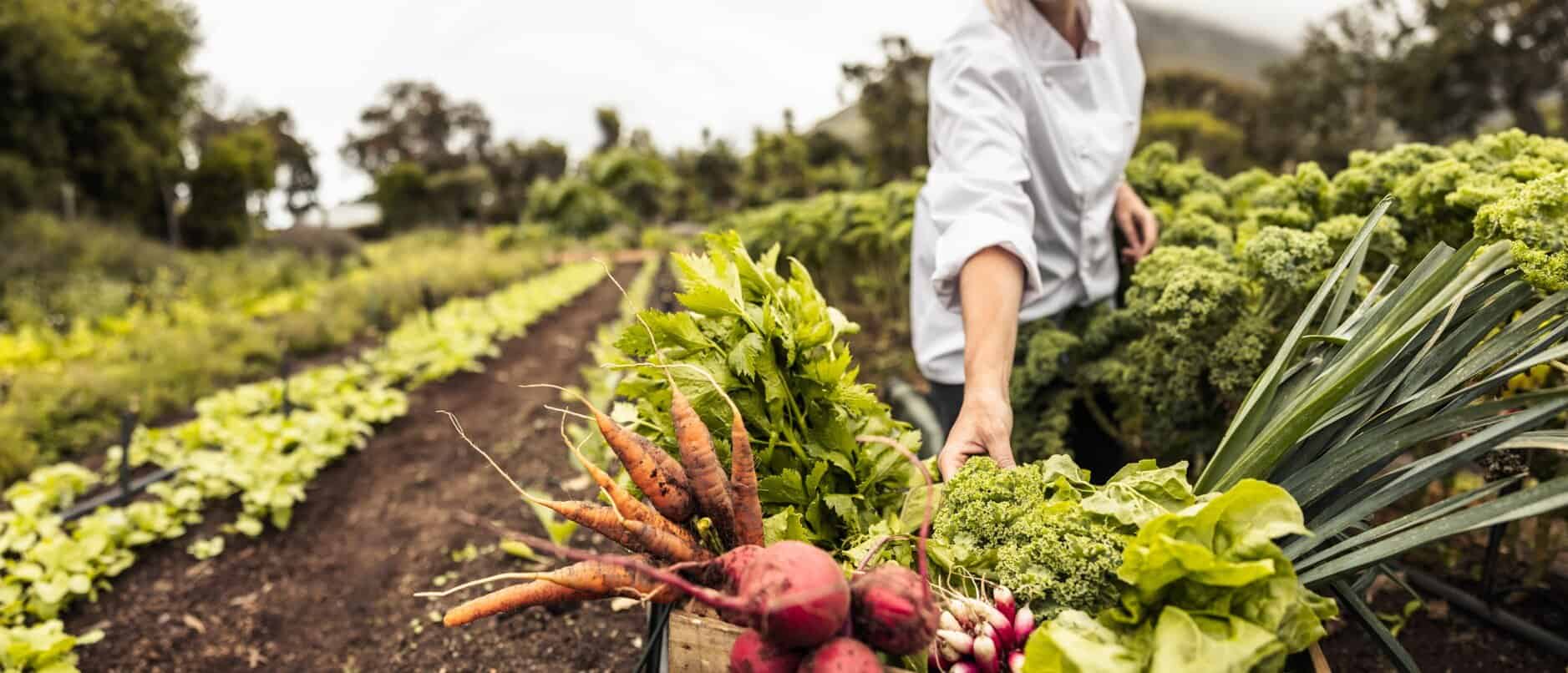
To make matters even more confusing, the definition of a plant-based menu can vary. Some are based 100 percent on the use of plants. Other plant-based menus are more accurately called ‘plant-forward’, meaning that plants are the focus of each dish, with small amounts of animal products being added to the plate as an accent. There are even plant-based menus that use fish, poultry, meat and animal by-products like cheese as a supporting cast to the main stars of the plate, which are always plants.
In trying to get a better understanding of these terms and how they fit into a restaurant menu, I reached out to chefs Gigi Stewart and Steven Satterfield, two vegetable focused chefs based in Atlanta, and asked them both their thoughts on vegan menus and how they compare to plant-based menus.
 Steven Satterfield of Miller Union Photo Credit: Andrew Thomas Lee
“Technically, a vegan is a human who chooses to avoid any/all animal-based products,” says Chef Steven Satterfield, owner of Atlanta’s Miller Union and winner of the James Beard Award for Best Chef – Southeast in 2017. “This includes all meat and seafood, dairy products, eggs, and sometimes gelatin, honey and leather or wool products.”
“It’s so important to eat fresh fruits and vegetables as part of ANY diet, they are what provide us with the most nutrition, vitamins and minerals,” he explains emphatically. “Plant-based foods can often be substitutes for real food, meaning that there are a lot of packaged products on supermarket shelves and in health food stores that market themselves as ‘plant-based,’ but they are really factory foods. I’m not a big fan of the term.”
“I would like to clarify that I am an omnivore who is passionate about vegetables,” he tells me, which is evident in Vegetable Revelations, his vegetable-focused cookbook, as well as on his menu at his locally sourced farm-to-table restaurant Miller Union. “I am not vegan, although I tried it out in the ‘90s and it was not for me, nor do I consider myself to be plant-based, but I do put fresh seasonal produce first.”
When asked if there is an audience to sustain his produce-forward menu, Chef Satterfield’s answer was a resounding yes. He claims an audience made up of farmers market shoppers, health nuts, those who care about where food comes from and those who like to cook at home but want the same care taken when they go out to eat.
Chef Gigi Stewart, an Atlanta-based food writer, considers herself a Whole Food Plant-Based chef (WFPB) and not a vegan chef. She says there is a marked difference. “Whereas a vegan chef is more of a lifestyle that avoids all animal products and by-products in food, clothing and other aspects,” says Chef Gigi, “but a vegan diet can include a lot of vegan processed foods, and consumers have to understand that processed foods—even when labeled vegan—don’t always serve our health.”
Instead of cooking strictly vegan cuisine, Stewart creates dishes that focus on unprocessed plant foods, like fruits, vegetables, whole grains, nuts and seeds, while strictly avoiding animal products, dairy, eggs and minimizing refined ingredients, added oils, sugars and salts. When asked about her audience, Stewart was excited to share that her clients are people looking for more than just a meal.
“They are seekers of healing, whether it’s physical, emotional or spiritual. I serve individuals, families and communities who want to feel better, eat better and live more consciously,” she says. “Many of my clients are not vegan at all. They’re simply curious about incorporating more plants into their lives. They come to me because I offer food that’s delicious, deeply nourishing and rooted in culture and connection, not restriction,” she adds.
The popularity of her “Healing Connection Campout,” a weekend of community activities and plant-based meals, is evidence of an audience interested in exploring a Whole Food Based diet.
However chefs choose to market it, it does seem that a plant-based menu, especially one that offers some animal products like Eleven Madison Park’s, may appeal to a broader audience by embracing not only vegans and vegetarians, but also ‘flexitarians,’ those concerned about their health and sustainability, even guests who are merely curious about the plant-based way of eating. This broader audience may be just what more restrictive menus are missing.

Chef Jennifer Hill Booker is the Owner and Executive Chef of Bauhaus Biergarten located in Springdale, Ark. and the author of the award-winning cookbook, Field Peas to Foie Gras: Southern Recipes with a French Accent.



