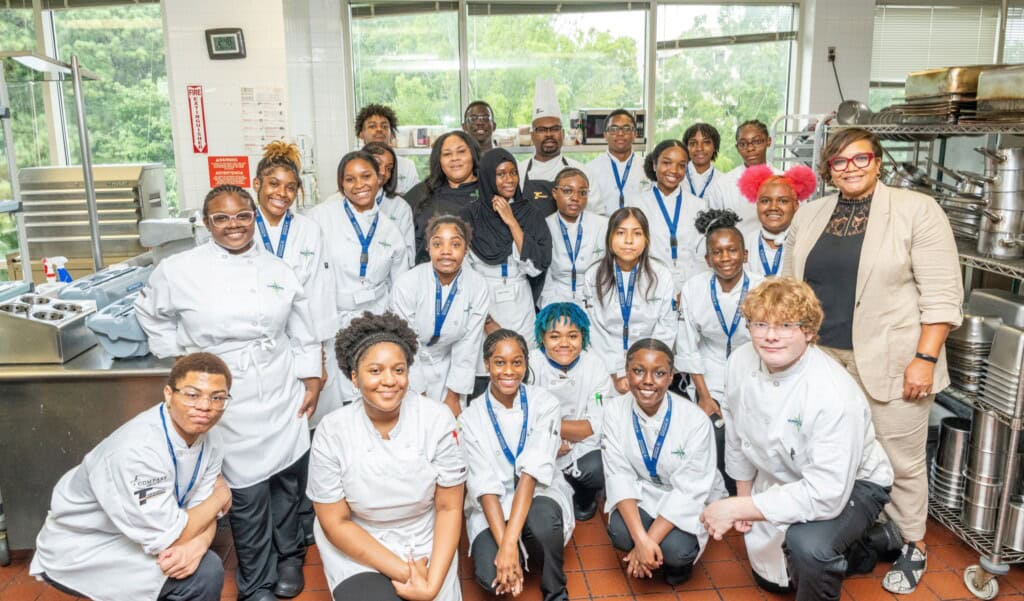
While many young people “find themselves” in college or even after, chef Simone Byron has known from an early age that she was meant to cook. For the granddaughter of the founder of the first Black-owned catering company in the Bronx, who was also the former executive chef for civil rights hero Marcus Garvey, “it’s a deep-rooted thing,” she says.
“I started my culinary journey in high school, went on to study Culinary Management at the Art Institute of Atlanta, then abroad in Switzerland and Italy,” she says, before moving on to cook for Disney brands, ESPN Zone in Buckhead and the largest food service company in the world, Compass Group. But after this running start, she looked inward, leading her back to her own inspiration point – the high school classroom, where she became a public-school educator in the culinary arts.
“Navigate started in 2017 in that classroom. I was really trying hard to connect my students to opportunities post-graduation,” Byron says, and, unfortunately, she found it more challenging than she’d hoped. Ever a problem-solver, she “decided to create a program to bridge students from underserved areas or low-income, high-potential areas into corporate food service, so they can grow in their careers and sustain themselves financially.” She brought her idea to her old employer, Compass Group, and their minority-owned arm Thompson Hospitality. To her excitement, they supported it wholeheartedly.
“I grew that program from 60 to 300 students with three educators in the classroom, as well as a student-run catering company and community garden,” Byron says proudly.
 Corporations Get On Board
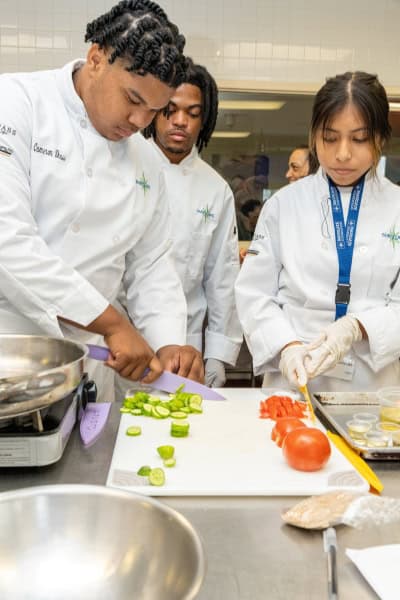
From there, it turned into an internship program, as sponsors like McCormick and The Coca-Cola Company also jumped on board to help realize her vision. She had hoped to create an initiative that provided transportation, “one of the biggest barriers for students, as they need to travel from lower income neighborhoods to places where corporations do business, like downtown Atlanta,” she says. Doing so would enable her to train underprivileged youths in Atlanta, its suburbs and beyond who dreamt of a future in cooking.
“This broke the barrier, because, quite often, for programs like these, you’re only able to recruit from within the city because of transportation logistics,” Byron shares. “With this in place, we’re able to recruit from all five metro counties, plus bring in kids from underprivileged suburbs,” all of which add the power of diversity and knowledge-sharing to the Navigate Program.
Now, each year, 100 to 120 students are recruited from high schools and community-based organizations like United Way, Salvation Army and city workforce departments. Among the 16- to 24-year-old participants, all of whom must apply and interview for acceptance into this free program, “We’ve got Asian, Black, Caucasian and Spanish-speaking students, all united in their interest and passion in wanting to do something for themselves,” she says. Those that participate become American Culinary Federation-certified and Department of Labor-recognized apprentices here and in the eight states the program has since expanded to.
The Skills to Pay the Bills
For these minority students though, Byron realized that experience in the kitchen wasn’t the only thing they needed to find success in the culinary field. Financial literacy is a key component to using cooking as a path toward independence and entrepreneurship, which led Byron to partner with Bank of America to teach students “what a bank relationship should look like.”
She confides, “There’s been some stigma in disenfranchised communities when it comes to banks, and assumptions like not being approved for loans or high APRs and rates. This partnership works to heal that and create healthy financial relationships where they get to actively relearn ideas prevalent in those communities.”
“BoA has stepped up in a major way, bringing bank managers to have transparent conversations about money, talk about credit, products for starting a business and car and home ownership.”
While corporate support is incredibly important, working chef guidance and support is what ultimately turns student cooks into chefs.
At the very top, chef Jasmin Nathan holds the position of Program Director, while chef Ryan Witten is the Industry Liaison Partner for Navigate. Top Chef alumna and Master Chef judge Tiffany Derry has sponsored teams to participate in the Shef Food + Wine festival (centering women in food), and other big names like Wolfgang Puck have helped prepare apprentices for a variety of settings and exposed them to multitudes of pathways a cooking career can take them.
Renowned and respected chefs in Atlanta that have stepped up to become mentors for Navigate have included Robert Butts of Auburn Angel, Gary Caldwell of Marcus Bar & Grill, and the iconic Deborah VanTrece, whose accomplishments have propelled her from the kitchen to a national stage as an author and television personality.
 Events, Panels and Bootcamps
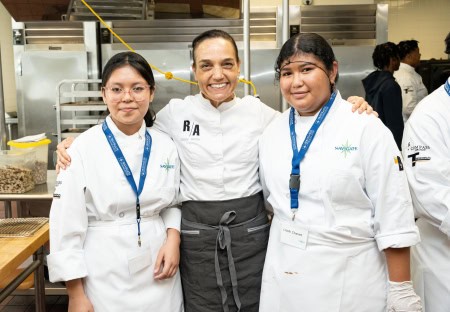
Talat Market and other local restaurants have happily sponsored events at their premises and welcomed students into their kitchens, as well as participated in fundraisers. Corporate chefs such as Danny Cicada have also lent their expertise and guidance, and pros like Nick Barrington of the prestigious East Lake Golf Club have shown support as well.
Best of all, nearly any chef can add their name to this distinguished roster. Byron assures, “We make it very easy to be a part of Navigate!”
“We are always welcoming chefs to be part of our panels and boot camps,” and having the “blessing of a full-salary staff to run the program,” she says, “we can make it so easy. Any time we ask a chef to come in, they spend an hour on a set panel to talk about their journey or lead a boot camp for roughly two total hours.”
During those boot camps, chefs teach segments like how to fabricate a chicken, sanitation safety and other important on-the-job skills. Not only are these opportunities great for Navigate students, they’re fantastic for prep cooks and chefs as well, providing them with teaching experience with little time investment or commitment, and connecting them with other chefs who may be farther along in their careers.
Another low-lift way to get involved? Cook at a Navigate event! Byron says, “We’re going to be doing a lot more fundraising. For example, for our study abroad program where every summer, we select a few students to go to Europe.” This means more dine-around events – community-sized ticketed food festivals where “chefs can come up and set up a table.” Sponsors may help with ingredient or travel costs, making it easier for chefs to participate, and attendance is limited to roughly 200-250 per event making it more manageable.
However, what that does mean is securing your ticket as an attendee as soon as the info is released—the absolute simplest way to eat well and do good helping to the next generation of culinary talent navigate to success.
 Su-Jit Lin has deep roots in the food industry, having grown up working in her family’s restaurant kitchen, serving in casual and fine dining service, and now, writing about it from her home in Atlanta. Her work has appeared in Eater, Serious Eats, Epicurious, EatingWell, The Spruce Eats, Kitchn, Southern Living, Reader’s Digest and more, despite the best and most distracting efforts of her dog, Sable Sugarpig.



