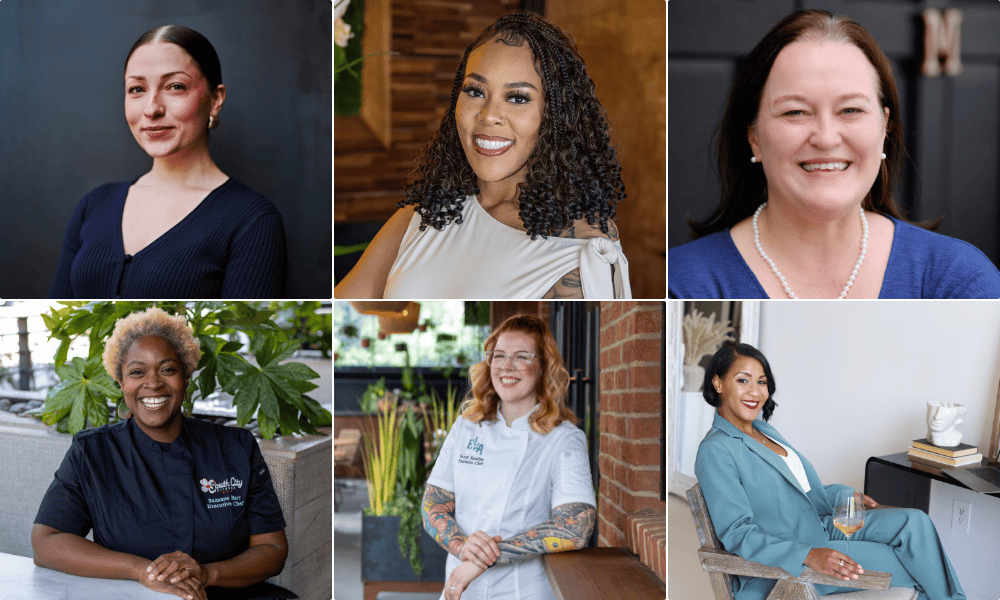
March is Women’s History Month, but when it comes to the Georgia hospitality industry, you might say that women are the future. While it’s true that hospitality in the South was originally built upon the work of women, and more specifically Black women, the credit, the recognition and the positions of stature within professional restaurants have long been reserved for men.
That paradigm is shifting, thanks to the hard work of women like the ones I was able to connect with recently. I asked them to share some of their challenges, their triumphs and the ways they are laying the groundwork for future generations of women. Being a female in hospitality myself, I found their input to be truly inspiring.
Restaurant Informer: What do you think are some of the unique challenges facing women in hospitality today?
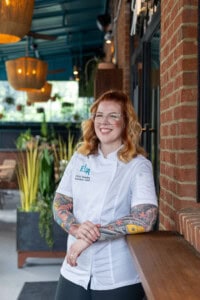
Gizzy Rawlins, executive chef at Fifth Group’s Ela, Atlanta: We’re asked to lead with empathy, but also prove our authority. There’s still an undercurrent of needing to “earn” respect in spaces where men are automatically granted it. There’s also the emotional labor component. Women are frequently the “culture holders.” We manage morale and mediate conflict, and that work isn’t always visible or valued. At the same time, I think women are redefining what leadership looks like in hospitality. We’re proving that discipline and kindness are not mutually exclusive, and that strong kitchens and strong cultures can coexist.
Deja’ Link, General Manager of Castellucci Hospitality Group’s forthcoming Koshu Club: To me, the industry feels like it’s in a period of transition. The women I work alongside are talented, confident and respected, and the focus now is on creating sustainable, fulfilling careers in a fast-paced, demanding environment. What’s exciting is seeing leadership evolve in real time. There’s more emphasis on collaboration, emotional intelligence, operational excellence and culture-building. These aren’t exclusive to women, but many women leaders are helping model and normalize them in meaningful ways. For me, the goal is continuing to build environments where leadership is defined by integrity, consistency and impact, qualities that benefit everyone in hospitality.
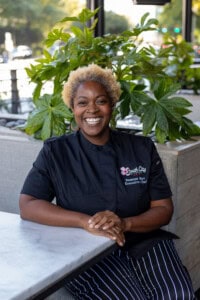
Suzanne Barr, Executive Chef at Fifth Group’s South City Kitchen, Buckhead: As a Black Executive Chef in a white, male-dominated industry, one of the biggest challenges I’ve faced is one that so many other Black women leading kitchens face and something that shouldn’t still be a fight—equal pay for equal work. We’ve trained in and led some of the most respected kitchens, alongside some of the most celebrated chefs, and still, we find ourselves asking to be valued at the same level. When we show up fully ourselves, unapologetic, clear, grounded in who we are, it can make people uncomfortable. But we are not asking for permission to be heard. We want to be compensated fairly for the work we already do at the highest level.
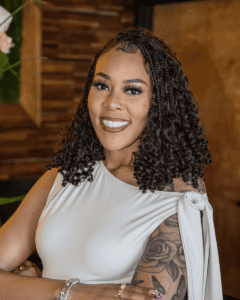
Michaela Finlayson, General Manager at Your 3rd Spot, Atlanta: Although women make up a large portion of today’s hospitality workforce, the challenges often become more visible as you move up the ladder. The higher you climb into senior leadership, the more male-dominated the space tends to be. At that level, women can feel added pressure to continually prove they belong in the room or justify their decisions in ways their male counterparts may not.
There is also heightened scrutiny of women’s communication styles, body language and demeanor. Traits that might be described as “decisive” or “direct” in men can sometimes be labeled differently when displayed by women. That constant awareness of how one is perceived can impact confidence, mental bandwidth and how a woman shows up daily as a leader.
RI: Do you think it’s easier or harder than it used to be for women in our industry and why?
Rawlings: It’s both. There are more women in visible leadership roles now, and that representation matters. But visibility also brings scrutiny. Social media amplifies everything: criticism, comparison, pressure. There’s less room to quietly grow. I think the opportunity is greater now. The pressure is too. The difference is that women today are more willing to claim space unapologetically.
Barr: The reality is layered. There are fewer of us in management, and that comes with both visible and invisible challenges. Some of what we face now is coded and packaged in a way that makes it seem like hospitality is just “broken,” when at the root, it’s often about power and imbalance. We can’t deny that this industry still has a long road ahead. More holistic, ethical approaches to leadership and a work force that needs training and education to be openly shared and discussed. The future of this industry can survive and thrive if we offer resolutions and steps towards an overhaul and reimagining.
RI: Have you found the Atlanta market to be a welcoming place for women to succeed, or does working in the South present its own set of challenges in any way?
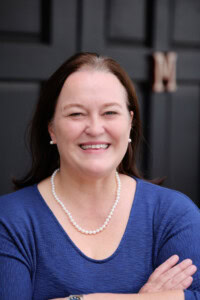
Glenda Barta, market partner at Marlow’s Tavern, multiple locations: Having spent my career in the restaurant industry in both Texas and now Georgia, Southern culture is all I’ve ever known. I often think of Atlanta as a transplant city—so many people move here and ultimately choose to stay. I believe they do so because of the genuine warmth and hospitality of the South, which creates a strong sense of community and belonging for everyone from all over the world.
That said, there is a silent understanding among women that supporting one another is essential to our collective success and to paving the way for future generations. Simply put, we have each other’s backs.
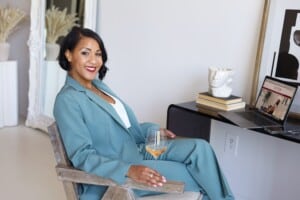
Larissa DuBose, National Director of Beverages of Paradies Lagardare: The Atlanta community is a special one. When I made the commitment to pursue additional wine certifications, there was no gatekeeping on the resources and groups available to help me learn more, hone my craft and ultimately set me up for success. The sense of community is genuine. We really do root for each other.
Link: I’ve found the Atlanta market to be incredibly dynamic and supportive, especially within the hospitality community. It’s a city that values creativity, growth and strong leadership, and I’ve seen many women thrive here in meaningful roles across restaurants, beverage programs and ownership. Atlanta feels progressive in many ways, even while being rooted in the South. There’s a strong sense of community, and relationships really matter here. When you lead with integrity and consistency, people take notice.
RI: Tell me about a female mentor you had in the industry and how they impacted you. If you didn’t have one that you worked with closely, who is a woman in hospitality that inspired you in your career?
DuBose: Sarah Pierre is the owner of my neighborhood wine shop, 3 Parks. She was the first Black woman I met in the Atlanta wine industry in 2014, and she immediately impressed me. Watching her exist in her purpose showed me endless possibilities. She embodies hospitality and business savvy. She’s well-studied, well-traveled and easily an influential figure in my wine and hospitality journey here. It’s been incredible to witness her star continue to rise and shine.
Rawlings: My first female mentor was Ria Pell. She was the first female executive chef I knew personally, and that mattered more than I realized at the time. Seeing a woman command a kitchen with authority gave me a blueprint. She didn’t shrink. She didn’t soften herself to be accepted. She stood shoulder to shoulder with the boys — and often outworked them. Ria gave me the strength to understand that I belonged in that space too. She taught me resilience, discipline, and how to hold the line when things got hard. There was a toughness to her leadership, but it was rooted in passion and pride for the craft. She has since passed away, but her impact on me is lasting. She showed me what was possible before I fully believed it myself.
Finlayson: Before working at Your Third Spot, I had a General Manager, Isabell Williams, who made a lasting impact on me. She was the first leader I experienced who genuinely cared—not just about the operation, but about the people within it.
Isabell modeled intentional leadership. She showed me what it looked like to uphold standards without compromise and to challenge those around you to rise to their full potential. Prior to her, I had worked under managers who were disengaged and visibly unhappy, and that energy inevitably affected the guest experience. Isabell was different—she was present, invested and accountable.
I’ll never forget the day she wrote me up and told me she was disappointed. It crushed me. I remember worrying that she would see me differently after that moment. Instead, she used it as a leadership lesson. She made it clear that she would hold everyone to the same standard—including me. She reminded me that we are human and will make mistakes, but that the standard would never be lowered.
RI: How do you mentor up-and-coming women in the industry yourself, and why do you think it’s important?
Barta: I make myself fully available. I don’t just talk the talk; I walk the walk. I show up consistently and strive to understand each person’s journey through their eyes. I help them carve out a career path that works for them, knowing that true success requires hard work and dedication. When they bring intensity and drive, I meet it with the same level of commitment and energy.
Barr: My job goal as a mentor is to help them discover their own voice, their own leadership style, their own rhythm in the kitchen and beyond. That requires humility. It requires asking tough questions of myself and being honest about what teaching style fits the moment and the individual. I lead with tools, with time and with a belief in collective growth. I share what I know, but I also make space for dialogue, for experimentation, for ownership. Growth isn’t lateral, it’s shared.
At the same time, I’m very aware that I can get caught up in my own beliefs and ways of doing things. That awareness matters. Mentorship isn’t about control; it’s about guidance. It’s about creating space where women feel supported, protected and empowered to step fully into who they are in an industry that doesn’t always make that easy.



