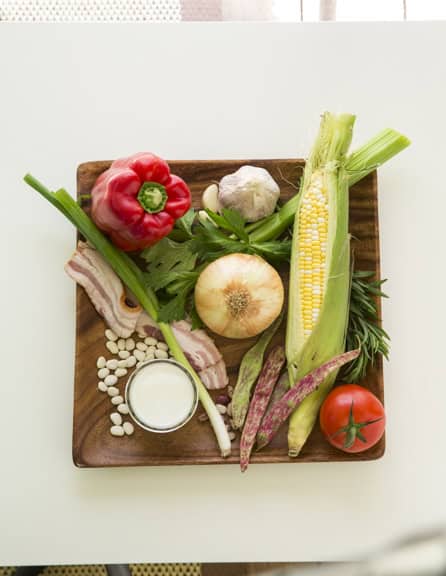
 Summer is the season when produce should do most of the work in both home and commercial kitchens. During summer, tomatoes arrive warm from the field, peaches perfume the kitchen, corn needs little more than heat for its true flavor to shine through and herbs add a fresh splash of flavor. For restaurants, this summer bounty offers an opportunity to build menus around ingredients that are at their freshest, most flavorful and often, most economical.
The important question is not, “What can we do with this?” but rather, “What preparation makes this ingredient taste most like itself?” The best summer menus are not necessarily the most elaborate. They are the ones that recognize the value of each ingredient.
The key to getting the most out of summer produce is to handle it with restraint. When an ingredient is truly in season, complicated preparation can get in the way of allowing it to shine through and be the star of the dish. For example, a ripe summer tomato does not need much help. Slice it thickly, season it with good salt and olive oil, or pair it with fresh herbs and creamy cheese, and it stands as a complete dish. Tomatoes can also be grilled, roasted slowly, turned into a chilled soup or folded into a sauce. This same tomato can then move through a menu in different forms without losing its seasonal identity. Tomato season can inspire both a fresh tomato salad and a deeply concentrated tomato sauce. It’s all left to the creativity of the kitchen.
Corn is another summer workhorse. Once shucked, you can oil and grill the ears until lightly charred, then you have the option of serving the whole corn on the cob with a whipped compound butter or shaving the kernels into a salad paired with other seasonal produce, like cucumbers, avocado and fresh lime. That same grilled corn can then be folded into succotash or purée into a sweet, silky soup. Save the cobs, as they can add subtle flavor to stocks and sauces.
Stone fruits, such as peaches, nectarines, plums and apricots, shine in both raw and cooked applications. They can brighten salads, accompany roasted meats, become chutneys or salsas, or be grilled for dessert. Their natural sweetness means they can stand alone, foregoing more elaborate preparations.
Summer All Year Long
An efficient kitchen always thinks beyond today’s service, and that is especially true when dealing with seasonal produce. When produce is plentiful, preservation can extend the season while reducing waste. Tomatoes can be slow-roasted and canned or dehydrated and transformed into sauces during those bleak winter months. Peaches and plums can become preserves or pickles. Cucumbers can be fermented or pickled, while excess herbs can become vibrant sauces, infused oils or frozen for future preparations. Even corn kernels can be removed from the cob and frozen for later use.
Preservation also creates menu depth. A dish featuring fresh grilled peaches might be paired with a peach chutney canned earlier in the season. Using the whole ingredient matters, too. Watermelon rind can be pickled, herb stems can flavor stocks and sauces, and vegetable trimmings can contribute to broths. Good summer cooking is not just about seasonal abundance; it is also about making that abundance last all year long.
Safety First
Beautiful produce is only useful if it is handled properly. Fresh fruits and vegetables can become contaminated during growing, harvesting, transportation, storage or preparation, so food safety needs to be part of the process from the moment produce enters the kitchen. Paying attention to your farmer’s growing and harvesting practices is paramount, if for no other reason than helping to reduce your diners’ exposure to potential food born illnesses.
At the market or receiving dock, choose produce that is fresh and free from significant bruising or damage. Pay particular attention to cut or packaged produce: items such as sliced melon, bagged greens and other fresh-cut products should be processed in a sanitary environment and then refrigerated and kept properly chilled.
If you’re buying your produce directly from a farmers’ market, remember that perishable foods should be kept cold while on display and during transport. The USDA advises using an insulated bag or cooler with ice or frozen packs, particularly during hot weather.
Once in the kitchen, storage matters. Perishable produce such as berries, lettuce, herbs and mushrooms should be refrigerated at 40°F or below. Some produce, including potatoes, sweet potatoes, bananas and dry onions, should keep better in an appropriate dry storage rather than the refrigerator. Most importantly, know where your produce comes from and the conditions in which it’s being grown.
Take a moment to research what’s in season in your area, get to know your local farmers and introduce some summer inspired recipes to your kitchen. Using summer produce, either now or preserved for later, adds freshness to your standard menu, at a lower cost and higher quality. It’s also a way to support local farmers and showcase regional ingredients.
Here’s a quick and easy recipe, showcasing summer watermelon, crisp watercress and a bright vinaigrette.
Watermelon Salad with Apple Cider Vinaigrette
Yields 6 servings
Ingredients:
- 3 tablespoons sesame seeds
- 6 cups seeded watermelon cubes, about 1- inch in size
- ¼ cup Italian parsley leaves
- ½ cup scallions, sliced
- ½ cup fresh chervil tops
- ½ cup olive oil
- ¼ cup apple cider vinegar
- 1 teaspoon salt
- 1 cup watercress leaves (about 1 large bunch)
Directions: In a small dry sauté pan, toast the sesame seeds until they are a golden brown, about 5 minutes. Remove from heat and reserve for later. In a large bowl, gently toss together half of the sesame seeds, the watermelon, parsley, scallions, chervil, oil, vinegar until well combined. Divide the watercress between 6 chilled salad plates or on a chilled platter and place the watermelon salad on top. Pour any remaining vinaigrette from the bowl onto the watermelon salad. Sprinkle the salad with the reserved sesame seeds and serve immediately.
From Field Peas to Foie Gras: Southern Recipes with a French Accent by Jennifer Hill Booker, © 2014 Jennifer Hill Booker, used by permission of the publisher, Tallahatchie Tales, Inc.

Chef Jennifer Hill Booker is the Owner and Executive Chef of Bauhaus Biergarten located in Springdale, Ark. and the author of the award-winning cookbook, Field Peas to Foie Gras: Southern Recipes with a French Accent.



