Make your beverage menus about your concept and your guests, and you’ll never hear those words again.
By Lara Creasy
This article originally appeared in Restaurant INFORMER, November/December 2013
Where does a restaurant start to write a truly great beverage program? There are a few factors that most everyone would agree make for a good restaurant beverage program: fresh, quality cocktail ingredients; a well-trained bar staff; and a thoughtful wine and beer selection. Beyond that, a program may also reflect current trends and advanced techniques, feature high-scoring and cult wines or incorporate housemade ingredients, like shrubs or bitters.
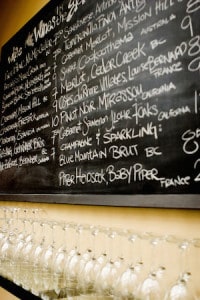 While it’s true that all of these things are important, there are a few factors that are crucial to making these efforts resonate with your guests and translating them into beverage sales. Those factors are sticking to your restaurant’s overall vision and writing your menu to reflect what your guests really want.
Most restaurant operators understand the importance of having a cohesive vision for their food menus, whether chef-driven, concept-driven or theme-driven. But it’s surprising how many restaurants and bars struggle with maintaining a consistent vision for their beverage programs.
On the one hand, bar programs can be an after-thought, a thrown together list of beers, wines and spirits that do nothing special to reflect the character of the restaurant.
On the other end of the spectrum, beverage managers can get caught up in the excitement of beverage trends, thinking it’s an all or nothing proposition. I’ve seen restaurants embrace trends to a fault, writing menus for their peers, or the critics or the drink snobs, but not fulfilling the desires of their average guests or thinking hard about whether those trends fit their overall daily operations. Guests respond to efforts from the bar that seem genuine and that fit naturally as part of their meal. One thing is certain: guests want to buy alcohol. But whether or not restaurateurs get them to buy drinks that actually enhance their experience at the restaurant is where decent bar programs differ from great bar programs. Here are a few tips to consider about your own bar program.
Be realistic about what your restaurant does well, and build your bar to match.
Part of the fun of going out to eat is experiencing something unique. We make dining choices as consumers based on the complete experience. We don’t go to a steakhouse expecting frozen tropical drinks, or to a fast-casual burger joint expecting a Wine Spectator Award of Excellence. Use these frames of expectation to satisfy your guests while also giving them something delightful and memorable they might not have expected.
When the team behind the Shake Shack restaurants started developing their original wine and beer programs, they looked at the type of guests they attracted, as well as how much time people spent in their restaurants. In an interview with Eater.com, the Shake Shack operators noted that they all came from fine dining backgrounds, so it was important to them to offer only craft beers and high-quality wines. But how did that fit with a burger stand concept?
When crafting the beverage program, they told Eater, they decided to go mostly with wine in half bottles, because their guests didn’t linger for long at the fast-service burger place, and the half bottles were a perfect amount of wine to enjoy in the quick timeframe. They also offered a short wine menu with tasting notes about which wines paired well with which burger toppings, wording the wine menus in the same fun way their food menus were worded.
To tie it all together, they served the wine in high-quality, disposable plastic stemware, to reflect the burger-stand feel. The operators got to do what they wanted – offer only great wines and beers – but they did so at an affordable price point presented appropriately, so their guests got a quality wine experience that truly fit with their food experience. The operators never compromised the identity of their restaurant concept.
Use clever “hooks” on the menu to draw your guests to order the unfamiliar.
Some guests will never stray from what they know, no matter how hard you try. But many of us just need a little something familiar to draw us in to feeling safe with trying something new.
Clever wording on drink menus is one way to draw the guest’s eye. When I began working at JCT. Kitchen with Ford Fry, the chef/restaurateur behind Atlanta’s Rocket Farm Restaurants group, I was immediately impressed by how he could word any menu item to make it sound appealing to the average diner, even if it contained somewhat “exotic” ingredients or used very technical French cooking techniques. He could always find the “money shot” in any menu item, the ingredient that would make it sell.
The hangar steak and frites was dubbed “Meat and Potatoes.” The mussels with serrano chilis in the broth were “Angry Mussels,” and they came with “toast for soppin’.” Braising was “slow cooking,” the grilled burger was “wood roasted,” and anything that needed particular emphasis was marked with a simple “…yum!”
I used this approach when writing drink menus for JCT., and it has always been successful. It took time to get JCT.’s guests to warm to the craft cocktail program I created there, because they were not used to it. It was unfamiliar territory at the time. So I followed Ford’s lead and took the things I knew the guests liked – lemonade, iced tea, fresh seasonal fruits – and I highlighted those things. Rather than coming out of the gate with bitters, vermouths and white whiskeys blazing, I earned the regulars’ trust by incorporating their beloved ingredients. I could list any number of other unfamiliar items behind those ingredients, give the drink a clever name that fit JCT.’s Southern farmstand concept, and it would sell.
For example, Prosecco was always a home run in any cocktail at JCT. Our guests couldn’t get enough of it, so of course I found as many ways as possible to work it onto the menu. During the holidays, we made Poinsettias, a classic sparkling cocktail of poached fresh cranberries and housemade orangecello. In the summer, we made a Southern version of the French 75 with bourbon, and we called it the Kentucky 75. The biggest coup was when I made a cocktail with Cherry Heering, Antica Formula vermouth and Prosecco, and named it Cherries in the Snow. This unfamiliar combination of ingredients flew out of the bar!
JCT.’s overall vision always stayed intact, and it gave me a great framework to follow when crafting the programs at No. 246 and The Optimist. The Optimist, for example, is a seafood restaurant with an oyster bar and beachy vibe. We do craft cocktails at the Optimist, but the theme is always the sea. Tiki drinks work great; rum and tequila flow; and the Salty Dog has been an outrageous best-seller. Brown and boozy is what’s currently hot in Atlanta, but at The Optimist, it’s always light and beachy.
Allow your guests a cautious adventure.
The same rules apply to wine programs. Be realistic about what your guests commonly order. Is your by-the-glass business mainly varietal-driven? If guests in your area order only Chardonnay and Cabernet, don’t shoot yourself in the foot by deciding to offer only esoteric European wines. Try offering Chardonnay from an unfamiliar region, like Chile or the Languedoc. Offer a Cabernet blend from South Africa or a Super-Tuscan from Italy. Your adventurous guests will be excited and your hesitant guests will still be within their comfort zone.
Always give your guests the benefit of the doubt. Give them the chance to try something unfamiliar, but don’t ever try to do it in a way that is preachy and educational. Dining out should be fun and enjoyable. The fastest way to turn a guest off is to bombard them with a list of wines or cocktail ingredients that they don’t understand. No one wants to feel that they are not “in-the-know” enough to order off the menu. A few brave souls will ask servers to explain, but most guests will put the drink menu down and order their old stand-by. Then you’ve lost the chance to create a unique and memorable experience for them at your restaurant. Lara Creasy is a consultant with 14 years experience in beverage management. She has developed wine and cocktail programs for such restaurants as The Optimist and King + Duke through her consulting business Four 28, LLC. Her work has been featured in such publications as Bon Appetit, Imbibe, and Wine Enthusiast.
To Craft a Truly Great Beverage Program:
- Do what you do best, and your sincerity will show.
- Don’t embrace every trend if it doesn’t fit your concept.
- Be realistic about what sells in your area and to your clientele. • Use a balance of the familiar and the adventurous, not all one or the other.
- Charge fairly for your neighborhood and concept type.
- Don’t be preachy or educational in your approach.
- Use clever wording on the menu to draw a guest’s interest and make it fun.
Lara Creasy is a consultant with 14 years experience in beverage management. She has developed wine and cocktail programs for such restaurants as The Optimist and King + Duke through her consulting business Four 28, LLC. Her work has been featured in such publications as Bon Appetit, Imbibe, and Wine Enthusiast.



