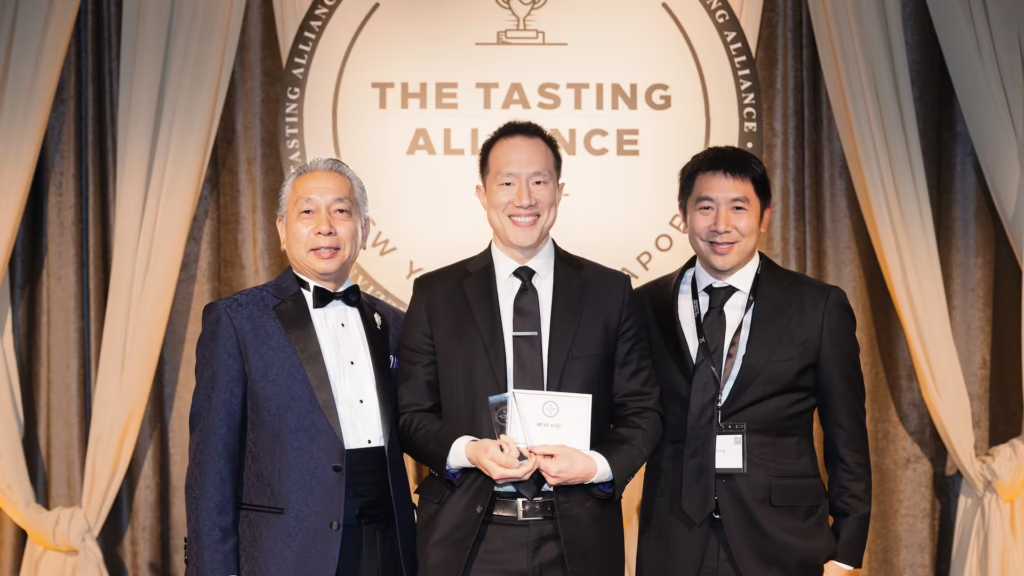
 James Kim and Ming Han Chung of Minhwa Spirits receive the best-in-class soju at the 2025 San Francisco World Spirits Competition.”
It has been said that you can’t be all things to all people. Conventional wisdom says that business owners should find their niche, master it, and if they want to diversify or shift to another lane, they should do it separately from their foundational premise as a precaution against consumer confusion.
Well, Ming Han Chung and James Kim, owners of Doraville’s Minhwa Spirits, are proving everyone wrong.
The longtime friends, who met back in high school, had been “throwing around business ideas for years,” they said. Alcohol was an area they kept coming back to, creating a rabbit hole of excitement for themselves. After learning about the history of Korean sool, its suppression then mass industrialization, the spirit that they found moved them most was soju. Thus, toward the tail end of the pandemic, Minhwa Spirits was born.
Fast forward to today, and the pair have become a major Atlanta success story which has earned national and even international praise. Their grain-to-glass craft soju distillery ferments locally grown rice with yeast, nuruk and water from North Georgia mountain springs for a premium product that’s won Best in Class at the 2025 San Francisco World Spirits Competition, making it the top-rated soju globally and the first non-Korean soju to have ever taken this title.
 They also secured Double Gold ranking multiple years for their selections and won bronze at the 2024 Bartender Spirits Awards. On top of that, they’ve developed a gorgeous aromatic Queen Huh chai gin with botanicals from another local favorite, The Chai Box.
After this winning streak, you would think the pair might have achieved enough. But something core to the brand is community, an emphasis that has turned their Doraville distillery space into what is now not only a distillery, a coffee shop and a restaurant, but a great example of all three.
We asked Chung how it was done.
Restaurant Informer: What made you branch out from just being a soju distillery?
Chung: We really wanted to foster a community around our brand, but during the day, a distillery or brewery isn’t exactly the first kind of spot people go to. So we asked ourselves, ‘What should we do with this space?’ Our answer to that was to make it a café during the day and support it with a team to incubate with a long-term residency. That team was Postern Coffee.
We started with coffee at the jumak [traditional Korean tavern or inn] as the Postern Coffee team was ready to go and we didn’t want to hold them back.
Now we’re thrilled to partner with Best of Atlanta award-winning chef Lino Yi, who brings authentic Korean flavors and modern techniques to the table for brunch, lunch and dinner.
RI: What kind of structure or shape do your partnerships take?
C: All of them are residencies in one form or another. We work closely with each group to figure out how to maximize success for everyone involved. The key is to figure out a balance to help everyone benefit and grow. We want to help incubate the next generation of food and beverage talent in the city, but we obviously need to make sure we can sustain the model for the long term.
Managing it all can be a controlled version of chaos, but when we see people we work with do well, it’s immensely satisfying!
RI: How did you select your partners?
C: We look for people or groups that fit our brand and audience. From there, we review their plan and then make sure that we can work together to achieve a certain level of quality for our customers.
Our strategy behind the different offerings is to work with brands that share our company’s culture and values. This brings multiple audiences together that share similar interests and builds awareness across them, which is helpful for smaller businesses, including ours.
RI: In what area of business are you finding the most success?
C: It depends on the season as things ebb and flow. The coffee business has been growing as the community has grown. The Postern crew has done an amazing job and the collaboration is at its highest potential during brunch. These collabs have really helped us show our spirits in different settings with different styles of food.
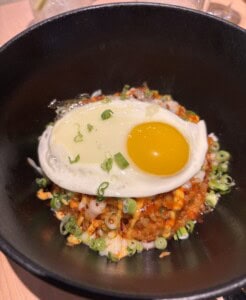
(The menu sample range is broad, encompassing items like kimchi grilled cheese with housemade milk bread, Bulgogi Hoagie, braised beef grit bowls, egg souffle or Korean fried chicken sandwiches, and tteok rice cakes with agnolotti in rose sauce with roasted pork belly.)
Juggling all these concepts also gave us some amazing insights on what our customers like and what works in the area. It’s emphasizing that our audience loves culture and food and can expect to get both when they come to Minhwa Spirits.
RI: What advice can you give to other businesses trying to tackle multiple niches?
C: While we’re evolving and will continue to tighten up those experiences and bring new ones to our audience, I can offer this: Treat your company as a brand. Relate to your audience and bring them things that fit the both of you. In return, you’ll get loyal and happy customers.
 Su-Jit Lin has deep roots in the food industry, having grown up working in her family’s restaurant kitchen, serving in casual and fine dining service, and now, writing about it from her home in Atlanta. Her work has appeared in Eater, Serious Eats, Epicurious, EatingWell, The Spruce Eats, Kitchn, Southern Living, Reader’s Digest, and more, despite the best and most distracting efforts of her dog, Sable Sugarpig.



