Back-to-school season means new teachers, new routines, packed lunches—and approximately 47,000 new opportunities for somebody to bring home a stomach bug. Kids are sharing classrooms, playgrounds, supplies, snacks and, unfortunately, germs. Meanwhile, restaurant employees are dropping their children at school, touching phones, running errands, riding public transportation and interacting with hundreds of guests.
Then we all come together in the restaurant. What could possibly go wrong? We cannot discuss illness in restaurants without mentioning one of food service’s least-favorite words: norovirus.
Norovirus is highly contagious and commonly causes vomiting, diarrhea, nausea and stomach pain. For restaurants, one sick employee can potentially expose a lot of people. Fortunately, some of our best defenses are incredibly simple.
This makes back-to-school and the beginning of cold-and-flu season a great time to revisit something that can make a tremendous difference in protecting our restaurants and families: good personal hygiene.
Keep It Out
Employees who don’t feel well need to understand which symptoms must be reported to management immediately. Vomiting and diarrhea should never be something an employee tries to work through in a food-service environment. But here is what we sometimes miss—employees must feel comfortable telling us they are sick.
Managers can’t overlook a reported illness just to cover a shift, and they can’t penalize a server or cook for being honest about a symptom and asking to go home. A signed employee health agreement sitting in a binder is not enough. Managers should discuss illness reporting expectations during onboarding and reinforce those expectations with their team throughout the year.
Personal belongings matter, too. Phones, purses, backpacks, jackets and keys travel through our cars, homes, schools and public spaces before arriving at work. Store them in designated areas away from food and food-contact surfaces. We do not need somebody’s backpack that spent the morning on a school bus joining us on the prep table.
Be honest with yourself: Your car is kind of gross. What’s in there? Phone. Steering wheel. Door handle. Gas pump. Keys. Drive-thru bag. French fry. That is quite the little food-safety journey.
After exiting your vehicle, whenever possible, wash your hands. The point is not to become afraid of everything we touch; it is to become aware of what we touch.
Wash It Off
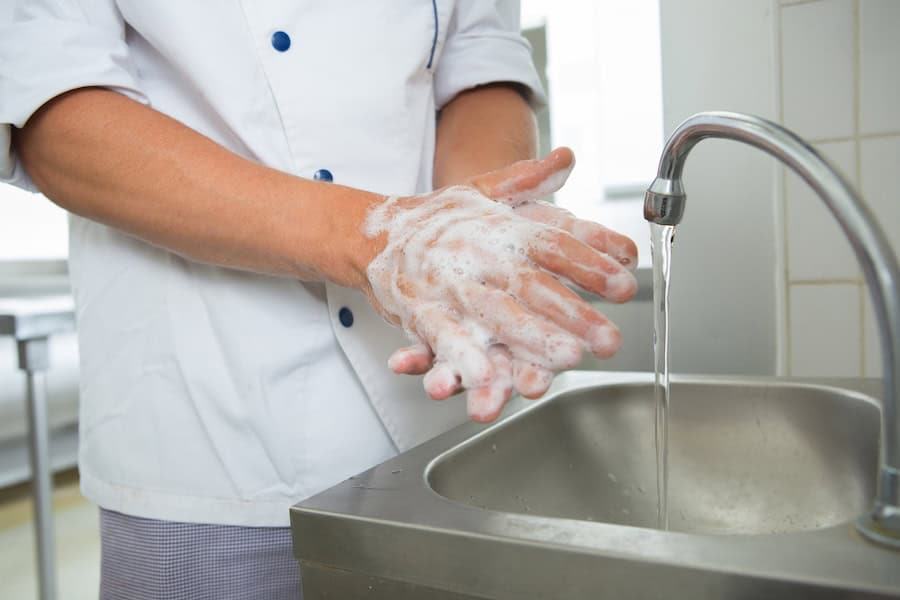
If I could choose one habit for every restaurant employee to master, proper handwashing would be near the top of the list. Employees should wash their hands with soap and running water before food preparation and whenever required throughout their shift—especially after using the restroom, touching their face or hair, eating, drinking, taking out garbage or handling something contaminated.
Hand sanitizer and wipes can be useful additional tools, but they do not replace required handwashing. Think of hand hygiene as a system. When handwashing is required, everyone should use soap, running water and a proper 30-second handwashing routine. Away from the sink, products designed specifically for hands, such as hand-sanitizer, can provide another tool.
For surfaces, remember that cleaning, sanitizing and disinfecting are not interchangeable. Always use products for their intended purpose and follow label directions, including contact times.
The Hand Sink Challenge
For the next three weeks, have a manager check every employee hand sink three times each day. Is there soap? Enough paper towels? Running water? Is the sink accessible and empty? If something is wrong, correct it immediately.
Catch employees doing things right. If you see someone stop and wash their hands at exactly the right moment, acknowledge it. Give them a reward, such as a piece of candy. Compliment them in front of the team. A piece of candy is considerably cheaper than a norovirus outbreak.
Restaurants should encourage guests to practice good hygiene too. Servers can try suggesting: “If you would like to wash your hands before your food comes out, the restrooms are down the hall on your left. Your appetizers should be out in about 10 minutes.” No lecture. Just the power of suggestion.
That ten-second interaction encourages a healthy habit while communicating something important: We care about your health here.
Take It Home
Food-safety habits should not disappear when we clock out. When you get home, change out of work or school clothes, put dirty clothing into the laundry, wash your hands and regularly clean high-touch surfaces.
Growing up, my mother constantly told us, “Wash your hands before you come to the table.” I never thought I would admit this publicly, but my mother was right.
Did we listen then? No. Did we get sick? Of course. And there was my mother, in her sweetest I-told-you-so voice, preparing the cod liver oil and vapor rub. Apparently, Mom was running an employee health program before I knew what one was.
Food safety is not something we practice because the health inspector might walk through the door. It is culture. Order the soap. Check the sinks. Teach illness reporting. Use the right products. Coach mistakes and celebrate good habits. Sometimes the practices that make the biggest difference are the things our mothers have been telling us our entire lives.
 Reese Jackson is the Founder and Lead Consultant of Savor Training Company, where she helps restaurants build stronger teams through practical training, coaching and operational systems. While her company specializes in food safety and health inspection readiness, Reese’s true passion is developing people. When she’s not conducting mock health inspections or teaching ServSafe® classes, Reese enjoys helping restaurant leaders grow their businesses by building cultures where exceptional service, food safety and continuous learning go hand in hand.



