Restaurants are hosting and launching pop-up concepts to raise revenue while also supporting local startups.
By Nancy Wood
 Zeb Stevenson, chef and co-owner of Birdy Biscuits and Redbird
A year ago, restaurateurs and chef-owners were bewildered. Faced with the fear of the unknown, business models were turned upside down. To-go and delivery became the mantra of the industry and searching for ways to increase revenue was a hotter topic than the latest habanero. Enter pop-ups.
Historically, pop-ups can be traced back to invitation-only and underground supper clubs of decades ago when chefs held dinners in their own homes. Over time, pop-ups have become a more financially viable way to test-drive a concept or stage an off-site location of an already established brand. Mainly they serve as a way to build buzz for a concept that leads to creating a brick-and-mortar restaurant.
Entrepreneurs who were already staging pop-ups pre-pandemic were hit as hard as brick-and-mortar spaces, but the beauty of their business model had some advantages: less financial investment and overhead, few or no employees and built-in adaptability.
The options are varied, too – staging one in an existing restaurant’s location during their off-hours, setting up in an unexpected space like a parking lot or the roof of a building, or finding a new use for space you already have. And in the industry’s so-called “new normal,” the pop-up concept is also serving as a supplemental source of revenue.
Windows of Inspiration
Like every chef hit by the pandemic in the last year, Zeb Stevenson initially didn’t know how it would impact Redbird, his then seven-month-old restaurant with business partner Ross Jones. Following four years as chef at Watershed working for Jones, the two wanted to do something different. After the sale of Watershed, plans for Redbird got underway. The restaurant opened in August 2019 in the Westside Provisions district in West Midtown Atlanta.
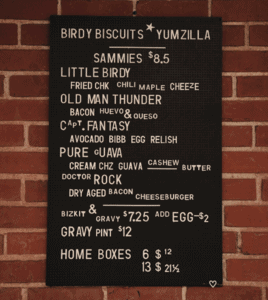 The Birdy Biscuits menu only offers a limited amount of items to keep profit possible
“Things were going really well – it was awesome,” recalls Stevenson. “I remember all of a sudden, we went from being full every night to looking around and thinking, where are the people? It didn’t seem real.”
After closing for three months, Stevenson reopened in mid-June 2020. After a week, an employee tested positive. “So we closed down again. We re-reopened, as I like to say, July 7th and have been open since.”
Finding ways to increase revenue started the wheels turning. With Redbird only open at the time for dinner Tuesday-Saturday and indoor seating reduced by 50%, Stevenson bought an outdoor bar and started serving cocktails on his 36-seat patio.
“It was a lot of fun, and it was a good way to catch transient business,” he says. But he knew it wouldn’t last when the weather changed. “It didn’t make sense physically to keep the bar open when you consider how many dining seats we were losing,” he says. “There’s this tipping point where the revenue from the outdoor is eclipsed by the revenue that you would drive by actually devoting that area to dining seats.”
The answer came in September when Stevenson was looking out the two windows that open to the patio. “I’m looking at the windows,” he says, “and the idea was ‘order here,’ ‘pick up here’ and nobody would have to come inside.” Throw in the fact that customers had been clamoring for brunch – which he had offered pre-pandemic – and an idea began to hatch.
By the second week in October, Birdy Biscuits was born. “I hadn’t been thinking about biscuits necessarily,” Stevenson says. “The idea came out of need, frankly. I’d been looking for something we could sell through the window, that we could execute quickly, that was really delicious and would strike a chord with people. I landed on biscuits.”
Stevenson put some basic tenets of successful pop-up concepts to work as well: keep it simple and operationally concise. “It’s the ‘do one thing and do it really, really well’ model as opposed to this huge menu,” he says. By only offering five biscuit sandwiches, biscuits and gravy, and boxes of biscuits to go, Stevenson says they can maintain a very high level of consistency and get people fed quickly.
Driven solely by social media, Birdy Biscuits has become “wildly popular,” says Stevenson, with people lined up every Saturday and Sunday from 11 a.m. to 2 p.m. The concept has exposed his restaurant to a new customer base that wasn’t aware of Redbird but, after becoming fans of the biscuits, are now interested in dining at the restaurant as well.
Opening the Door to Opportunity
For George DeMeglio, owner of Italian restaurant a mano in Atlanta’s Old Fourth Ward, the pop-up is more than a plus to the bottom line. After a career as an engineer, the 61-year-old wanted to do something that felt good. While he acknowledges that restaurateurs always have to watch the bottom line, DeMeglio says, “We’re not doing this to make money. We’re doing this to support two communities – our restaurant community and our neighborhood.”
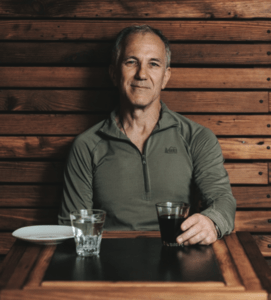 George DeMeglio, owner of a mano
That support has been a part of his operation for more than a year. “We have a reputation for it,” he says. Up-and-coming chefs – or even home cooks – can apply to use DeMeglio’s space, then he and his staff look at their followers, interview them, check their resume and see how familiar they are with commercial kitchens. As he says, it takes a good bit of hands-on time for the uninitiated, including “how to run the equipment, how to run expo – how to do those kinds of things in a commercial kitchen.”
In the beginning, he charged $350 per pop-up. “That’s what we figured the overhead cost was for us – having to interview them and having to do all this work each week to find and qualify different chefs.”
Since they were originally doing it indoors, DeMeglio says they did make money on beverage sales. “We always made some money – maybe not enough to make it worth it, but sometimes it was great,” he says.
Not surprisingly, during the pandemic, a lot changed. “The Sunday before everything shut down was our last pop-up until the summer. The first six weeks, everything kept changing – it was an insane time,” he says.
Reducing his staff from 21 to 7, DeMeglio was focused on to-go and how to stay safe. As the spread of the virus started to turn during the summer of 2020, the discussion at a mano focused on what to do to start getting back to normal.
“We started by moving our bar outside,” he explains. “And we started cooking in the parking lot.” Getting “back to normal” also included reviving plans to bring back the pop-ups.
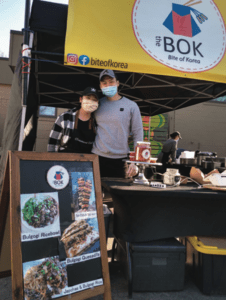 The BOK – Bite of Korea – weekly pop-up at a mano features Korean fusion food like bulgogi quesadillas and rice bowls
At that point, DeMeglio began hosting concepts they had already worked with and were familiar with – including Pho Cue, a concept that marries Vietnamese flavors with central Texas barbecue. “They took over our parking lot [on Sundays] for the entire period of Covid until last month [February],” he says.
These days, DeMeglio charges the pop-ups anywhere from $40 to $100 a week based on utility use and how much support the chefs need. He also opens the restrooms inside a mano and allows the use of his range to cook, as well as use of the dish pit. “There’s some coordination involved, but it really doesn’t cost us much and it adds great value.”
At this point, DeMeglio isn’t rotating concepts as he did before the pandemic – and many of the pop-ups he has supported over time are on the verge of launching their own brick-and-mortar locations, including Abby Singer and Kmayan ATL (both in Kirkwood’s Pratt-Pullman Yard), Pho Cue (in Glenwood Park) and Happy Seed, a Latin concept that still sets up shop on Mondays.
“They use our kitchen to prep on Sunday and execute on Monday. We’re going to keep it open as long as they want it.” Currently, a mano’s parking lot is home to The BOK – Bite of Korea on Sundays. “When you have somebody who has a routine, it makes it a lot easier for us from a management standpoint.”
DeMeglio is about to spread his largesse by opening a second location in Murphy’s Crossing in Atlanta’s Capital View area. If all goes well, he plans to open in the summer of 2022. “I definitely want to do the same thing there that we’re doing here now,” he says.
The Real Bottom Line
Realistic expectations are the name of the game when it comes to pop-ups as a revenue source. Whether you’re hosting a new concept on a rooftop patio or extending your brand with a one-of-a-kind offering on-site, pop-ups as revenue boosters require careful consideration.
For Zeb Stevenson, there were a lot of things to think about before launching Birdy Biscuits. For example, the check average for a traditional brunch is always lower than for dinner service, and during current conditions, revenue is already lower. By streamlining the order and pick-up window operation and limiting menu options, Stevenson says Birdy Biscuits has been a nice boost to the bottom line.
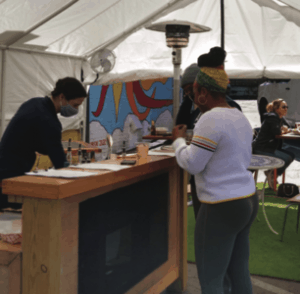 A mano constructed outdoor seating and a bar in its parking lot to accommodate both diners and the various pop-ups it hosts during the pandemic
“Depending on the week,” he says, “it’s added 10-12% to the weekly top line, which is fantastic. It’s not huge, but it’s much more profitable than our dinner service and we’re in a situation like everybody else where huge boosts to the bottom line are not very realistic.”
Stevenson advises others interested in creating new concepts within an existing brand to find a handful of smaller contributors to the bottom line that are consistent. Birdy Biscuits has not only become an incremental revenue booster, but it helps keep the brand alive.
Although Stevenson and his co-owner Ross Jones haven’t determined the future of their popular pop-up, “Regardless of what we do,” he says, “I would rather find a way to make Birdy the driver for the brunch menu permanently.”
George DeMeglio’s approach to pop-ups is firmly in place as well. While the money is not part of the equation for him, he says he does try to find ways to make supporting pop-ups sustainable.
“If you make a little bit of money, you can justify the overhead that goes into coordinating it. I have a great staff and a great community,” he adds. “We’re looking to do all we can to support the folks that need it.”
If you’re thinking about launching a pop-up…
- Find the right existing kitchen
- Learn how commercial kitchens operate
- Be a conscientious guest
- Stay within your concept
- Focus on the things you do best
- Ask questions
- Ask for help when you need it
- Reach out to your social media network
If your pop-up is ready for the next step…
- Understand who you are and what your goal is
- Talk to other chefs/owners
- Research owning vs. leasing space
- Weigh financial risks to personal assets
- Know who you’re doing business with



