Veganism is here to stay, and that’s a good thing for Georgia’s restaurants
By Haley Harward
What was once a fringe movement centered around animal welfare, veganism – where one abstains from eating any product made from an animal – has grown in popularity amid the pandemic along with wider concerns around climate change and personal health.
Customers now more than ever seek out healthy options during standard grocery store trips and nights out at restaurants. Shoppers spent $3.3 billion on plant-based foods in 2018, and there are now more than 24,000 veg-friendly restaurants in the U.S. There’s even a plant-based “butcher” that focuses on 100 percent vegan meat and cheeses based in Minneapolis that ships its products across the country. And more than a third of Americans now consider themselves “flexitarians,” a style of eating that encourages mostly plant-based foods while allowing some meat and animal products in moderation.
With the expected growth for the vegan and plant-based market, more restaurants are turning to vegan alternatives to meet demands, reach new consumers and drive sales.
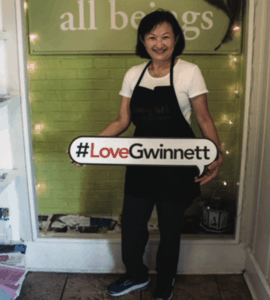 Tammy Chiu, manager of Loving Hut, a vegan restaurant in Norcross.
“This year [compared] to last year, [because of] the pandemic, I think we’ve had more than 50% growth for the business,” says Tammy Chiu, manager of Loving Hut in Norcross. “Every day we have new people saying ‘oh we want to try vegan.’”
Chiu is not the only one experiencing a rise in demand for vegan options. Compared to 2018, plant-based food sales nearly doubled worldwide by 2020.
Currently, the market for plant-based, vegan products sits at around $13 billion but is projected to reach at least $24 billion by 2025, especially with vegan chain restaurants like Cinnaholic expanding their reach and mainstream fast-food chains, including Dunkin’ and Burger King, adding plant-based options to their menus.
The rise in demand for plant-based product production is partly thanks to the COVID-19 pandemic. As the virus emerged during the early months of 2020, people became more self-aware of their health, starting with food.
“People are now more conscious than ever before of the things that they put into their bodies,” says Pinky Cole, founder and owner of Slutty Vegan ATL. The Atlanta-based restaurant concept has seen astounding success and national attention for its focus on delicious plant-based burgers and sandwiches.
The desire for healthier alternatives rose not only from witnessing the devastating effects the virus had on weaker immune systems but from the disruption in food security, nutrition and food systems.
Although mandated for the public’s safety, the lockdown policies in early 2020 caused a major upheaval in the global economy, supply chains and food environments, prices and production – an effect not lost on the restaurant industry. As a result, food quality and availability suffered, leading people to rely on more readily available unhealthy options.
The trend toward veganism grew even more during 2020 than it had the previous year. The demand accompanying the trend has created a whole new market for restaurateurs not currently providing vegan options to explore and incorporate into their concepts.
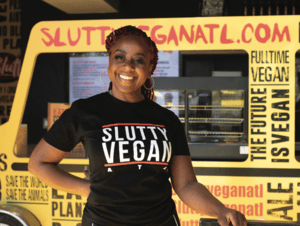 Pinky Cole, founder and owner of Slutty Vegan in Atlanta. Photo courtesy of Slutty Vegan.
“Veganism is fresh. It’s trendy right now,” says Cole. “But I want veganism to be something that becomes a staple in inner-city communities. I’m helping people open up their consciousness. I’m helping people change their minds about vegan food. Because what’s going to happen is, when they leave Slutty Vegan and they go to another restaurant, they’re going to say, ‘Let me see what kind of vegan options they got here.’”
The plant-based product market has grown to include versions of animal products with competitive tastes and prices, including beef. When Impossible Food’s Impossible Burger started showing up on restaurant menus around 2017, it expanded the opportunity for people to choose something vegan over meat. Creator and CEO of the Beyond Meat products, Ethan Brown, in particular, influenced the public’s perspective toward vegan options.
“[Beyond Burger] plays a very important role because [it] tastes exactly like beef,” Chiu says. “People who’ve never eaten vegan couldn’t tell which was which when tasting the Beyond Burger and the beef burger. That’s helping people understand, oh, vegan is healthier and it tastes exactly the same.”
Since these burgers went mainstream, plant-based meat sales increased by over $430 million by 2020. Not to say there was a direct correlation between the increase in plant-based meat sales and the launch of these products, but it heavily influenced the public to try the highly publicized burgers and branch out to try other vegan meat options.
Cole opened the Slutty Vegan in 2019 in Atlanta’s Westview neighborhood with the idea for healthy junky food, incorporating plant-based Impossible Meat to create juicy burgers slathered in vegan cheese and veggies. Since the restaurant’s initial start, the business has surpassed all expectations and propelled the vegan movement in Atlanta. There’s now three locations, a food truck and Bar Vegan that opened this year in Ponce City Market.
Slutty Vegan doesn’t directly cater to a vegan customer; instead, Cole created a versatile product that drew in swarms of customers both vegan and not.
“Restaurants should incorporate vegan items into the menu to show that they can be versatile and provide options for every type of consumer,” says Cole.
While around 3-6 percent of the U.S. identifies as vegan (that’s more than 9.7 million people), a majority of those who buy plant-based meat products also eat standard meat and animal products. So there’s less of a risk in adding vegan options to the menu because the market has grown to include consumers who are not explicitly vegan but looking for a healthier alternative.
“There’s a New York restaurant owner, he owns seven restaurants,” says Chiu. “Acouple [of] years ago when he realized vegan restaurants are a big trend, he shut down his business just to remodel and open vegan restaurants and [was] very, very successful. The earlier people change to vegan restaurants, they have [the] potential for very good business.”
As Cole and Chiu put it, veganism is a trend right now, but opening a vegan concept or even adding a few vegan options to the menu to take part in the growing movement is much more than that; it’s creating a culture of change.
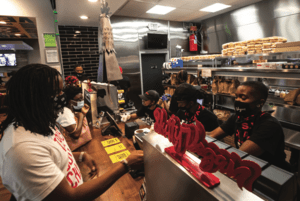 Slutty Vegan has drawn national attention for its plant-based burgers, chicken sandwiches, brats and more. Photo courtesy of Slutty Vegan.
“At Slutty Vegan specifically, we create the culture,” says Cole. “Our consumers come for the experience that we create, and they leave with the food.”
Incorporating vegan options doesn’t have to mean adding salads and more vegetable-rich meals to the menu. Instead, restaurateurs like Cole and Chiu create healthy, plant-based spins on traditional meals. Loving Hut offers similar menu items and flavors like dumplings, pho and stir fries that other non-vegan Asian restaurants offer, but does so with plant-based options. Customers seek out Loving Hut for its tasty offerings and healthy ingredients.
The same can be said for Cole’s Slutty Vegan. People can devour a whopping, loaded burger but feel good about the decision afterward. Cole has even branched out her idea even further to create more healthy options with her Ponce City Market concept, Bar Vegan. Cole also recently partnered with Big Dave’s Cheesestakes owner Derrick Hayes to open Dinkies at Ponce City Market, serving vegan Philly cheesesteaks, cauliflower wings, cheesesteak egg rolls and tots.
“At Bar Vegan and Dinkies, customers get to experience a healthy twist on some of their favorite food and drink options,” says Cole.
As more restaurants incorporate vegan items into their menus, the more accessible and desirable the food becomes. It creates a chain reaction, sparking customers to seek out new foods and restaurants to expand their menus to accommodate.
“Veganism is definitely here to stay,” says Cole. “There have been pockets of community in Atlanta where there’s nothing but vegan food options, and that’s a beautiful thing.”



