Despite staffing challenges, supply chain issues and inflation, 2022’s beverage leaders look to a bright future in Georgia restaurants.
By Lara Creasy
 To say that the last few years have been weird is an understatement. I’ve dealt with more changes and new experiences in the restaurant industry over the past two years than I did in the last 20. After I got over my initial shock and settled into the unknown, things have gotten a lot easier to process. The good news is: I’m not alone. The even better news is: I don’t really mind the unknown, and it doesn’t seem that many of my peers do either.
Entering 2022 has felt not like the false optimism that let us down in 2021, but rather like the resolution and acceptance that comes with the dawn of a new era. It feels collective that we’ve all finally given up on that notion of “getting back to normal” and instead decided that we were ready to face, boldly and creatively, whatever it is that’s coming our way. Those of us that have remained in this industry through the shake-ups of the last few years are no longer afraid. We’re survivors. More importantly, we get to be the architects of the next phase. What could be more exciting?
I recently took the opportunity to pick the brains of some others who, like me, spend their days curating and executing beverage programs at Georgia restaurants. It should surprise no one that instead of gathering for a round-table discussion like we may have in the past, we put our thoughts together virtually. The consensus was surprising but also inspiring.
I talked to the following group of Georgia industry superstars, all of whom gave me reassurance in the present and hope for the future: Stephanie Castellucci, owner and director of human resources for Castellucci Hospitality Group (owners of such restaurants as Bar Mercado, Iberian Pig and Double Zero); Ian Mendelsohn, director of beverage operations for The Fifth Group (operators of such restaurants as South City Kitchen, La Tavola and Alma Cucina); Francis Coligado, beverage director for the so-hot-right-now restaurant Delbar in Atlanta’s Inman Park neighborhood • Kevin Bragg, general manager and beverage director for Southern Belle and Georgia Boy in Midtown Atlanta; and Clarke Anderson and James Letendre, beverage managers for Rocket Farm Restaurants (overseeing such restaurants as Marcel, The Optimist, St. Cecilia and King + Duke).
Creasy: Ok, there is so much to talk about I almost don’t know where to begin. Typically, we write these “State of the Industry” type articles about trends to look out for in the coming year, which I definitely want to talk about. But first, I want to address some of the actual stuff that’s been going on at our bars. We can’t ignore the numerous elephants in the room! This year has been a doozy. So, let’s talk about staffing challenges. Has the staff inconsistency that we’ve all been experiencing presented any opportunities that you weren’t expecting?
 Stephanie Castellucci, owner and director of human resources for Castellucci
Hospitality Group.
Stephanie Castellucci: We’ve used it as an opportunity for cross-training.
Creasy: Yes! We have been doing this at my restaurants, too. Cross-training servers at the bar has been a big one, and a lifesaver. We have also been requiring all aspiring managers to be trained at the bar. In the past, working at the bar was viewed as a “privilege” almost, but we’ve had to adapt our views on that as operators, to make it more just a seamless part of the FOH, which I love!
Castellucci: I think it’s great, and it’s here to stay as part of our operations training.
 Ian Mendelsohn, director of beverage operations for The Fifth Group.
Ian Mendelsohn: Staffing for us has been a major challenge but also a major opportunity. We were able to launch several educational initiatives throughout our restaurants that have been a major boon in recruiting. I think the staff coming into the restaurants does not have the kind of experience applicants had in past years, but I am excited about their passion and the energy they bring to our business. They just want to learn.
Creasy: I agree. We have a company philosophy at Rocket Farm that we “hire personality and teach technique,” and I have really seen that come to life for us this past year. It used to be frowned upon to be an inexperienced applicant in many high-end restaurants, but now I think it’s almost preferable. We can capitalize on the enthusiasm and teach good habits! We have had success stories, like someone who went from being a busser with zero experience to lead line cook in six months. If the drive is there, the industry now has room for rapid growth. Has staff inconsistency led you to make any changes in your bar business or to your menus?
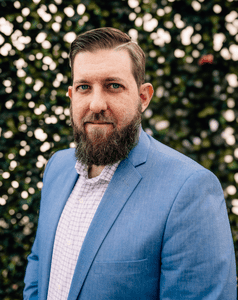 Kevin Bragg, general manager and beverage director for Southern Belle and Georgia Boy.
Kevin Bragg: We’ve certainly changed our model over the last couple of years. We have two restaurant concepts that operate in tandem and share the same bar. We’ve cycled through the various stages of the pandemic: bottled cocktails with takeout, batched summer patio drinks with casual patio fare, finally settling on tasting menus. Our staffing needs and the design of our program have changed with each iteration.
We’ve shifted the focus in Southern Belle to a 4-course tasting menu, and we finally reopened Georgia Boy in December [as a 15-course tasting menu with four seatings per night]. With the tasting menu format in both restaurants, pairings are the main beverage sales driver. Our typical guest will start with a cocktail and then move into the pairing. We still pre-batch much of our cocktail list, and we’re able to operate with one bartender instead of the two we had prior to the pandemic. We promoted one of our servers to assistant sommelier to assist with the expanded pairing program.
We’re now open three days a week instead of five. We decided to concentrate our efforts on increasing sales on those days instead of spending on labor throughout the week. It also has the benefit of giving the entire team a very healthy work-life balance.
We also shifted our pay model for the staff during the pandemic. Both FOH and BOH receive the same higher hourly pay and equal shares of the tip pool. It’s created much more consistent and equal pay for everyone, while bringing the team together.
Creasy: It has been very interesting to see restaurants getting ahead of the inevitable changes that are coming to restaurant labor by being more proactive about it all.
 Francis Coligado, beverage director for Delbar.
Francis Coligado: I do not want to say this too loud, but we haven’t had any of the staffing issues that others are experiencing. I try to put my bar team’s needs first, especially their mental well-being. This job is not only physically demanding but also mentally demanding. You are always on stage on shift, and that can be difficult to do on a daily basis. If anyone needs time, I give it to them. I have had almost no turnover, so they have grown together into one of the best bar teams in Atlanta. And because of this, our cocktail menu has stayed consistently creative, balanced and amazing.
Creasy: So if you’re lucky enough to have people behind your bar, what about products? The supply chain went crazy this year. How are challenges with the supply chain and product availability affecting how you do business at your bar?
 James Letendre, beverage manager for Rocket Farm Restaurants.
James Letendre: Everything now must have a ‘Plan B.’
Bragg: Everyone in the industry is used to adapting on a moment’s notice, but I don’t think we’ve experienced it on this scale before. When the back-up to your back-up to your back-up is not available, you really have to get creative. It’s created a lot of last-minute wrangling for our somm to line up ideal pairings with our tasting menus. Like most restaurants, we don’t have enough space to store much extra product. We’re forced to strategize when ordering to maintain supply of some of our most critical products.
We’ve also had to bring in new styles of glassware since replacing our current product can take months to ship instead of days.
Mendelsohn: In years past, when I had certain by-the-glass, cocktail or banquet programming in place, an OOS (out-of-stock) was rare. The distributors and suppliers worked hard with their shippers and inventory control people to keep us in stock. In our pandemic world, an OOS is just another 9 a.m. phone call, and my teams are getting used to them. We have had items be OOS that I never thought would ever be, and I mean items that are staples of bars, restaurants and even gas stations. This has caused major headaches with our IT and marketing teams, as they can’t pivot on a dime.
 Clarke Anderson, beverage manager for Rocket Farm Restaurants.
Clarke Anderson: Supply chain challenges have really made room for the little guy in the world of spirits. It has made it easier for guests to understand that we don’t have one of their old standby brands, and they seem more willing to explore a mindfully chosen substitute. We are carrying more of the small craft spirits than ever, giving us more cool stories to tell all the time.
Creasy: You’re so right. It’s also a great time to buy local. When you can’t get the bottled beer that you want from Mexico, there is always an opportunity to buy a lager-style beer from a local brewery. Of course, those of us that create beverage menus are usually pretty open to new products, but as you pointed out, it’s this built-in opportunity to sell the lesser-known brands that is unique in our current scenario. What about prices? Have rising prices for wholesale goods led you to change what products you offer or curb creativity in any way to remain profitable?
Letendre: No, value is always a consideration, so if an ingredient’s inclusion in a recipe ‘makes’ the cocktail, I always attempt to be flexible with the other components.
Coligado: When we opened Delbar, Fares, the owner, told me to make the drinks the way I wanted them to be made. Our first priority was that the quality of the drinks had to be great. We made sure that the drinks tasted great, looked great and were priced effectively. We found that guests loved our menu and were willing to spend the money to get it.
Creasy: Have you all had to raise prices on your menus? If so, has it affected business at all?
Mendelsohn: It really depends on which category as to whether we increase pricing. When a favorite single-malt Scotch price jumps over 30%, we have no choice but to raise the price. However, we are only raising the price so much, and we are having to get very creative with our specialty cocktails and well program.
Bragg: We’ve raised prices where we can, but it’s still not quite enough to cover the extra costs we’re seeing. With two tasting-menu restaurants, we’re incredibly conscious of walking the fine line of being expensive while maintaining the guests’ perception of value for the experience.
Creasy: That perception of value has become the most challenging task lately. Guests will pay to dine out, despite inflated prices, if they feel they are getting their money’s worth. Consumer demand for quality and authentic experiences has collided with rising prices and labor challenges to create a perfect storm of opportunity, if you ask me. The only way forward is stepping up the way we care for the people in our industry, so that they in turn care enough to provide our guests with truly exceptional service, each and every time. It’s a tall order, but there’s no phoning it in for our industry anymore, no coasting! More than ever, we have to value our people as the professionals they are, and then we have to demand professional output from them. I see that as a positive pattern of growth coming out of all of this.
Bragg: I honestly believe that if you haven’t changed anything over the last couple years, you’re doing it wrong. Despite the challenges, we’ve had so many opportunities to reevaluate how we operate. Our team is stronger than ever, and we’ve seen better sales in the last few months than we were seeing before the pandemic, while operating fewer days.
Letendre: I am hoping that the disruption of ‘normal’ that has cast light on much of the industry’s acceptance of poor physical and emotional working conditions will move forward with encouraging gains in workplace respect and positivity.
Mendelsohn: On a personal front, I’ve been in this business since 1998, and I think I’m more excited about the industry than I have been in years. There was a lot wrong in our business, from rampant sexual harassment, lack of LGTBQ representation and almost no representation of African-Americans for leadership roles. None of that is acceptable, and even though it has taken way too long to realize, the pandemic forced many to look at the business and know we all have to do better. I am excited about the opportunities to help shape the next generation, so they can do better than we did.
 Lara Creasy is Beverage Director for Rocket Farm Restaurants, overseeing eight Superica locations in four states. She loves all things beverage from tea to tequila, coffee to cocktails, whiskey to wine, and gets to make a living at it.



