A social media presence is required these days to market your restaurant. But how do you leverage this ever-evolving tool to your best advantage?
By Toby Bloomberg
As more people turn to their phones to decide where to eat, social media is becoming essential to communicate with guests and a valuable tool for restaurants striving to succeed in an increasingly competitive market. From family-owned diners to Michelin Star establishments, restaurants are discovering that platforms like Instagram, Facebook and TikTok are powerful tactics for reaching customers. They offer new ways to showcase menus, share stories and build relationships.
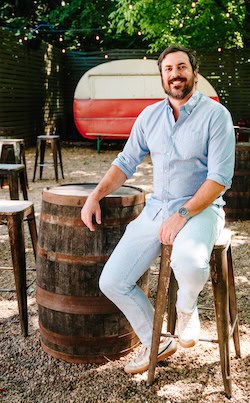 Michael Lennox
”Every brand these days has to have some social presence or they’ll be invisible to a large swath of the market,” says Michael Lennox, CEO of Electric Hospitality, which includes Ladybird Grove and Mess Hall, Muchacho and Ranger Station in Atlanta. Lennox’s statement reinforces the new reality for restaurateurs: social media is no longer optional – it’s essential.
From celebrating the nostalgic, camp-fire charm of Ladybird Grove and Mess Hall in Atlanta’s historic Old Fourth Ward to showcasing edgy guests’ dance moves at Johnny’s Hideaway in North Buckhead to the exciting anticipation of opening a Mellow Mushroom pizza box at home or at work, social platforms offer unique opportunities to capture attention and turn casual viewers into loyal patrons.
“We find using organic social media for engaging posts and stories, as well as [social media] advertising, helps to increase the brand awareness, brand recall, brand recognition, and to keep Mellow Mushroom top of mind for our guests,” says Anne Mejia, senior vice president of brand development at Mellow Mushroom. The company’s social media accounts have a solid following, with 222,000 on Facebook, nearly 80,000 on Instagram and 51,000 on TikTok.
Perhaps the most valuable aspect of social media is its “social” nature. Social media offers a direct channel for real-time engagement with guests. According to research by MGH, 42% of U.S. diners interact with restaurants on at least one social media platform.
The same study found that 45% of U.S. diners tried a restaurant for the first time because of the establishment’s social media post. Moreover, 22% said a restaurant’s social post enticed them to return.
Evolution of Social Media in Restaurants
 Anne Mejia
The restaurant industry’s approach to social media has evolved significantly over the years. Early adopters primarily used Facebook and Twitter to promote special offers and provide updates. With the rise of Instagram, the focus shifted to visually appealing “food porn” – high-quality photos and videos designed to entice purchase and create a community of loyal fans.
The advent of sophisticated video creator tools embedded in platforms like TikTok and Instagram leveled the playing field. Independent restaurant operators now have access to easy-to-use visual communication tools once reserved for agencies or operators with larger budgets. Even with new technologies the question remains, “What’s going to get us out there a little more?” asks Chris D’Auria, CEO of Johnny’s Hideaway, an Atlanta institution that first opened in 1979.
Although social media platforms are free to join, they come with investment costs of time, people and asset creation. Paid in-platform advertising can boost visibility, but organic growth depends on the algorithm, which prioritizes content that pulls high engagement.
According to Adam Mosseri, head of Instagram, engagement rates (likes, views, comments, saves, shares) are more important than follower counts. Higher engagement rates indicate better post performance and higher relevance.
Digital Hospitality
 Chris D’Auria
Social media has reshaped how customers interact with restaurants, setting new expectations for engagement. This interaction provides an opportunity to extend hospitality into the digital world. “If you’re friendly and responsive, you’re not just painting a picture of hospitality – you’re living and breathing it,” Lennox says. “This ispart of our mission and should be embedded in everything we do, including social media.”
In this digital age, every interaction becomes a chance to showcase your restaurant’s commitment to guest satisfaction. Promptly answering direct messages, thoughtfully responding to comments and celebrating user-generated content does more than just acknowledge customers – it makes them feel valued and heard.
These online interactions serve as a preview of the in-person experience shaping perceptions of potential guests. You can create a seamless experience that begins with the first online interaction and continues through to the last bite of dessert. This approach not only enhances customer satisfaction but also builds a community of loyal patrons who feel connected to your brand both online and off.
A Winning Social Media Strategy
With restaurants, food influencers, cookbook authors, chefs, even your mom snapping photos of her baking all vying for attention, the low barrier to entry in the food and beverage social media space has made it highly competitive to build an engaged following.
Strategic planning and a deep understanding of what your audience values are essential for creating visual storytelling to stand out from the competition.
1) Know Before You Go. Set clear goals and understanding the limitations of social media will alleviate frustrations when it comes to tracking results. “We’re not looking for organic to drive sales. We’re looking for it to increase awareness, guest engagement, reinforce the brand,” says Mejia, describing Mellow Mushroom’s strategic direction.
Although it’s a challenge to track how many people visited your restaurant based on their organic social media experience, there are digital indicators that can give you a clue to how successful your online presence is.
“The number of clicks on your address, call button, email or online order links are strong indicators of customer interest, which can help assess the impact of social media on your business,” says Caroline Schaefer, founder and CEO of Grub Freaks, a digital media agency that specializes in food photography, social media management and graphic design for restaurants and others in the hospitality industry.
2) Stay Consistent. Maintain brand consistency through ensuring all content is aligned with your brand’s voice and values, even when participating in popular trends or memes. As D’Auria of Johnny’s Hideaway, puts it, “Although it’s the Wild West, the biggest strategy is keeping to our roots.” Reinforcing your brand image through tone and imagery helps distinguish the restaurant in a crowded landscape.
3) Use the Tools. Leverage the analytics built in each platform that supports your goals. “The tools are definitely valuable along with information you can gather,” says D’Auria. However, keep in mind measuring social media’s impact is like trying to photograph a moving target. Unlike traditional marketing metrics, social media data is constantly evolving. Each day brings new likes, comments and shares, which continually reshape the overall picture.
This dynamic nature means that social media insights are cumulative and fluid. Effective social media measurement requires a long-term view, focusing on patterns and progress rather than daily fluctuations.
Innovative Social Media Tactics
When engaging with your guests on social media, coming up with a fresh and unique way to create buzz can be fun but also a challenge. Still, the benefits to your brand are worth the extra effort. These campaigns can also spark some creative ideas for your own concept.
 Johnny’s Hideaway’s “Lost and Found”Campaign. Johnny’s Hideaway successfully leveraged social media to reflect its edgy vibe through an innovative “Lost and Found” campaign. Each post highlights a different lost item with a witty caption, engaging the audience and strengthening the brand’s fun, casual identity. The campaign is an example of how businesses can use social media to connect with their customers on a personal level, turning ordinary situations into memorable marketing opportunities. “Keep it relatable is the biggest strategy in keeping to our roots,” says D’Auria.
Ladybird Grove and Mess Hall’s Outdoor Inspiration. Ladybird effectively showcases its unique outdoor space inspired by the national park system. “Ladybird is inspired by the national park system and national parks in general, so we tend to find a lot of inspiration for our content in outdoors themes or ideas,” Lennox says. Bright yellow umbrellas, colorful cocktails and the dog-friendly aspects of their patio highlight the inclusive and welcoming venue.
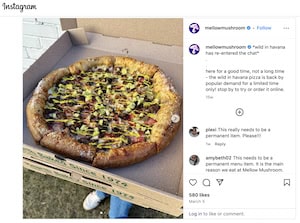
Mellow Mushroom’s Customer-Driven Product Revival. Mellow Mushroom demonstrated the power of customer engagement by bringing back the Wild in Havana pie in response to a customer’s Instagram message. The limited-time offer – a pizza inspired by the Cuban sandwich featuring jerk-marinated pork, ham, salami, pickles and a mustard-mayo-based sauce drizzled on top – performed exceptionally well, validating the decision to listen to customer feedback.
As a gesture of appreciation, Mellow Mushroom sent the guest a gift card, acknowledging her role in the campaign’s success. “People don’t have to interact with brands,” reminds Mejia. “They can ignore brands, but they’re following brands for a reason – they’re passionate about the brand.”
Leveraging partnerships and influencer collaborations can significantly expand a restaurant’s reach and credibility. “One tactic we consciously employ with regularity is leaning into brand partnerships that add value to our audience and expand our reach,” says Lennox. Their partnership with Topo Chico for Ladybird’s Ranch Water Rodeo resulted in cross-promotional posts boosting engagement and followers.
Influencer marketing can be particularly effective in the restaurant industry, opening the door to new networks of potential local guests. However, it’s crucial to ensure that influencer content remains authentic.
 ”It’s important for us to ensure that influencer content is organic and true to the brand,” Mejia says.
As you would for any partnership tactic, “set expectations regarding creation of content and always ask for post metrics from all influencers,” says Schaefer.
Another popular tactic that expands reach and increases followers is Instagram giveaways. Typically, participants are entered into a drawing for prizes that can range from trips to gift cards to brand swag.
The rules are simple. People are asked to like a post, tag friends and often share the contest post on their Story page, creating buzz and attracting new followers.
Integrating loyalty rewards and exclusive offers into social media platforms is an emerging trend. This approach not only incentivizes repeat purchase but encourages social sharing. A post on social media before sending an email, adding to your website or dropping a media release can create FOMO (fear of missing out) excitement for your followers.
Although in the early adoption stage, artificial intelligence is emerging as a valuable tool in social media marketing for restaurants that may speed up the process of content concept, caption creation and insight analysis. “AI can’t be ignored,” Schaefer says. “We use it as a coworker to edit and proof work.”
The Future of Social Media Marketing
For restaurant leaders skeptical about social media’s value, it’s important to recognize that these platforms are where many customers now seek information and make dining decisions. At Mellow Mushroom the future is now.
“We actually consider the next generation of consumers, Gen Z, social first,” Mejia says.
“Before they make a restaurant decision, the way to reach them is social first. That’s why increasingly every year we put more resources behind social media; we see it as an important avenue to reach the future and present consumer as well and keep folks engaged with the brand.”
As we look to the future, it’s clear that social media will continue to play a crucial role in the restaurant industry. By embracing new trends, engaging authentically with audiences, creating relevant content, and leveraging the right tools and metrics, restaurants can effectively use social media to grow their business and connect with customers.
The integration of social media into broader marketing strategies is no longer optional – it’s essential for modern restaurants looking to thrive in a digital world. As you navigate your restaurant’s social media journey, remember that at its core, social media is about building relationships. It’s an extension of the hospitality that defines our industry, allowing us to welcome guests, share our stories, and create memorable experiences both online and in our dining rooms.
 Toby Bloomberg has been called a social media “OG.” Her adventures in food social media began in 2006, with the launch of the first culinary character blog for Gourmet Station. She was part of the team that launched Chick-fil-A’s first listening strategy and has worked with chefs, restaurants and craft foodpreneurs. She believes a brand’s most effective way to build and nurture relationships is through strategic digital storytelling. Bloomberg is a member of Les Dames d’Escoffier International’s Atlanta



