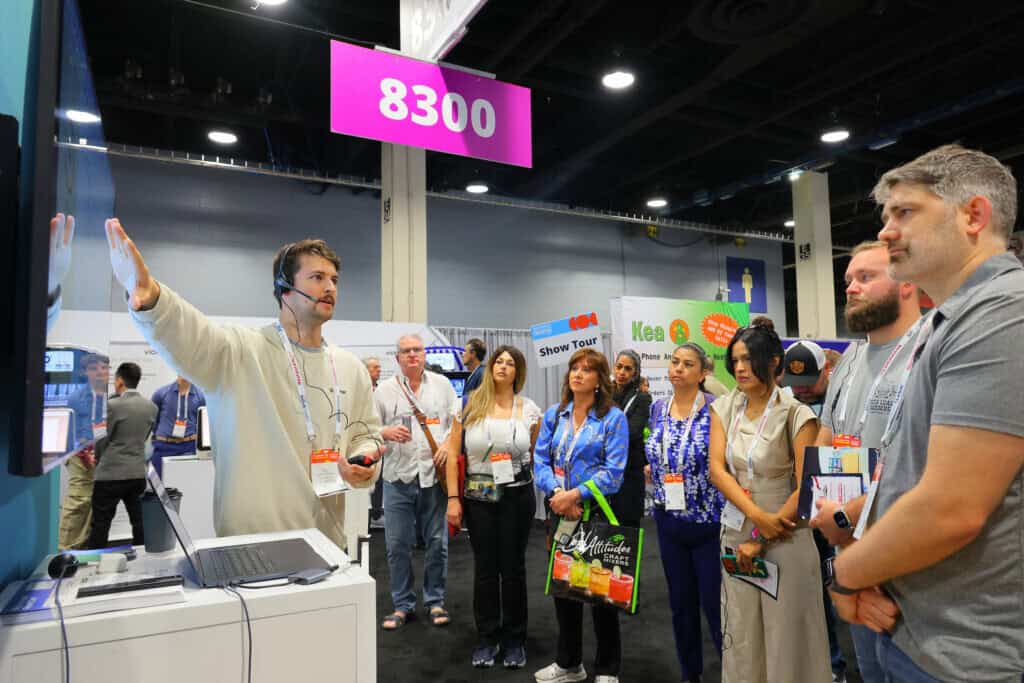
 Photos copyright National Restaurant Association
There isn’t a single industry that can escape the current onslaught of AI-powered products and automated workplace solutions. Hospitality is included in this deluge, but where does a busy restaurateur even begin to look at how these products might actually provide practical solutions for their business?
One great place to start was the annual National Restaurant Association Restaurant Show, held this spring at McCormick Place in Chicago. The show was an awesome introduction to the products that will usher the hospitality industry into the future. The show boasted roughly 2,300 exhibitors from around the world showcasing over 900 product categories spread across 720,000 square feet of exhibit hall space. It’s one of the biggest, most immersive and interactive hospitality shows in the country, so it’s no surprise that vendors flock to the exhibit hall to showcase the latest in restaurant equipment.
On display, attendees saw everything from commercial kitchen equipment, HR and business services, costumer-engagement solutions, robotics and automation trends to international innovation and restaurant technology software.
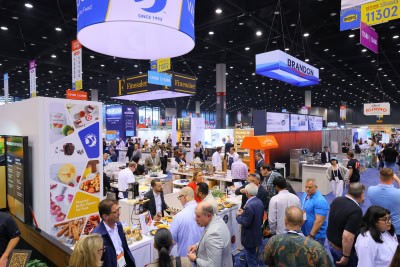 Photos copyright National Restaurant Association
The Future is Now
For those interested in restaurant technology, the South Hall and Kitchen Innovations Showroom was the place to explore. There, demonstrations and vendor conversations made it clear that restaurant technology is not just about software, but about how to turn that software into practical restaurant solutions. Although there wasn’t a specific theme showcased there, Artificial Intelligence was visible across the show floor, along with the ever-present commercial restaurant theme of doing more with less labor.
One of the most talked-about technology questions of this year’s show was “How can restaurants produce and deliver consistent food with fewer variables by using equipment that automates and improves execution?” There were hundreds of vendors vying for a face-to-face meeting to answer that question. The most popular products that cut through the noise were offering more than just futuristic talking points. These companies sold software and products that solved those problems in more practical ways, like pre-programmed deep fryers, food delivery robots and automated voice ordering systems programmed to streamline the customer experience.
Miso Robotics made quite a splash as it showcased its flagship AI-powered automated fry station and cooking assistant, Flippy. This robotic arm, which was presented as a way to fill the gap of high kitchen turnover and labor constraints, promises to auto-adapt and optimize the frying process. An employee drops the product into the fry baskets and then picks up the perfectly fried item at the end of the station. Once programmed, Flippy can identify what item is in the basket and adjust cook time for the perfect doneness. It also ensures twice the speed of a human worker with frying consistency across every shift. A big marketing point is that it can be built into the customer’s hot line-right under the existing Ansul system and works with the restaurant’s installed commercial fryers.
Solve Staffing Problems with Robotics
Bear Robotics, positioned as a global leader in service robotics and physical AI, unveiled Servi Q at this year’s NRA Show. Touted as the most compact robot in the Servi family, it was purposely built for restaurants with tight spaces, narrow aisles and high-traffic environments, with an eye towards reducing labor costs. The thought behind Servi Q is that the robot’s compact size will appeal to many hospitality venues that couldn’t adopt autonomous service because of tight, high-traffic areas. What’s more, it’s presented as a fleet multiplier, designed to communicate peer-to-peer with every robot in the Bear Robotics ecosystem. In doing so, Servi claims they can provide a mixed fleet of robots tailored to your space. For example, a Servi Plus robot covers the main dining room while the smaller Servi Q navigates the narrow bar area, the tight kitchen corridor and carry-out pickup area, all while self-organizing and eliminating the need for waitstaff.
Presto Voice was a real stand-out product for restaurants with an existing drive-thru. It offers an automated voice ordering system focused on streamlining quick service restaurant drive-thru operations. The selling point is that their AI voice assistant minimizes delays due to customer questions and miscommunication, resulting in more accurate orders. It was created to integrate into existing drive-thru hardware and POS platforms to automate order-taking. The idea behind Presto Voice is that it will reduce labor costs by freeing up your staff for other tasks, while potentially increasing revenue from the consistent upselling of your menu items.
While these three examples focused on AI-driven solutions, the show was jam-packed with many other products to help streamline front of house service and back of house production. I don’t have space to cover them all, but I’m already looking forward to the 2027 show to see what’s next.
The 2027 National Restaurant Show is currently scheduled for May 22 to May 25 at McCormick Place in Chicago. Check out Show Badge options here. Three smaller one-day educational events, billed as Road to the Show, will be held in December across Schaumberg, Ill., Cherry Hill, N.J. and Houston, focused on the topic of workforce management.
 Chef Jennifer Hill Booker is the Owner and Executive Chef of Bauhaus Biergarten located in Springdale, Ark. and the author of the award-winning cookbook, Field Peas to Foie Gras: Southern Recipes with a French Accent.



