 Finding solutions to supply chain challenges in an unpredictable time can be difficult, but it is doable
By Nancy Wood
If restaurant owners and operators thought supply chain issues reached their height during the pandemic, the roller coaster ride isn’t over yet. Taking steps now to prepare for the future is clearly the order of the day.
Just two years ago, restaurant owners and operators were closing indoor dining, searching for sanitation and to-go supplies and trying to keep staff on board. As businesses started to reopen, the supply chain challenges became more evident. Production had slowed because demand was down, yet demand rose and every link in the chain struggled to keep up – farmers, manufacturers and distributors.
By 2021, the ripple effect was fully in place, and now it’s seemingly in overdrive.
Not only is there an ongoing battle of supply and demand, but inflation, fuel prices, transportation issues and the impact of the war between Russia and Ukraine have exacerbated the climate.
According to the National Restaurant Association’s 2022 State of the Restaurant Industry report, 96% of the 3,000 operators surveyed reported supply shortages or delays of key food and beverage items in recent months, while 90% of operators said food costs are higher than they were prior to COVID-19, with 8 in 10 reporting higher labor costs.
While no one in the industry can predict the future, meeting current challenges and finding solutions to keep businesses running is a top priority – not just for restaurateurs, but producers and suppliers as well.
Challenges and Predictions
“There are three main challenges I see for restaurateurs,” says Kyle Hight, Ph.D, clinical assistant professor in The Cecil B. Day School of Hospitality Administration at Georgia State University’s J. Mack Robinson College of Business, “getting access to the things that they need, rising prices and preparing for what could be a challenge in the future.” Understanding these challenges can inform decisions that restaurateurs can make in an unpredictable scenario.
When supplies are limited and demand has stayed the same or increased, and prices are going up, Hight says that affects the production of everything, including meat, vegetables and equipment. Price increases will be greater than anticipated for restaurateurs, he says, and “the outlook is that in some food categories, this increase is just going to continue. Typically,” he explains, “as oil prices increase, there’s a positive correlation with food price increases, especially with meats.”
Hight thinks that restaurateurs should be prepared for price increases over the next year in meat across the board, along with eggs. He also anticipates that fats and oils are going to be very expensive, but the prices of produce will normalize, “especially, if you can get something that’s more local.”
Compounding these challenges are fuel costs. “Gasoline was going up even before the war,” Hight says, “so you’re going to see shipping prices that will increase the unit cost.” Those costs are already being passed down the supply chain in the form of fuel surcharges by some vendors.
The effect of the war between Russia and Ukraine – and the possibility that it will continue for some time – is expected to have a direct impact on global food production. The two countries combined produce a third of global wheat and barley exports, and Russia is the third-leading producer of nickel, the major component in stainless steel – a mainstay in every commercial kitchen.
Even though Hight thinks inflation will “tap down within the next 12 months to a much more normal 3% to 5% range,” assuming there’s not a new coronavirus variant or other repercussions from the war, the impact of supply chain issues is expected to continue for the foreseeable future.
John C. Metz, executive chef, CEO and co-founder of Sterling Hospitality, says, “It’s definitely running through the end of this year, and I think probably into the first quarter of 2023 – barring any shakeups with this war situation and the oil business. That ripple effect was very long and very deep – deeper than I think anybody thought.”
Strategic Solutions
Navigating supply chain disruptions has sent restaurant owners and operators in every category scrambling for solutions, not only to keep their doors open, but to keep menu options available and customers happy.
But the residual effects of the last two years are still being felt – and may continue for much longer than producers, distributors, suppliers and restaurateurs thought. In the meantime, owners and operators are taking steps to change menus more frequently or simply remove hard-to-get or more costly items from their menus altogether.
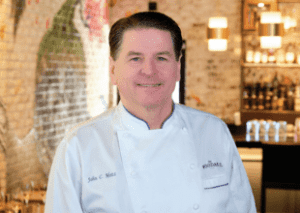 John C. Metz, executive chef, CEO and co-founder of Sterling Hospitality.
“In 2021,” says Metz, who oversees both the business and culinary operations of Marlow’s Tavern and the Woodall, “the ripple effect from the supply chain was so great that we actually had to start sourcing differently – not our core things like burgers or chicken – but auxiliary items became very hard to get. We then had to be flexible enough to find different sources and different ways to get those products to us.”
One of Metz’ solutions was to shift his menus away from more specialty items and look into featuring different items, like another kind of steak or a more unique fish. Making menu changes based on seasonal items and trends is another way to keep costs down.
A strategy Metz instituted during the pandemic was to add a few specialty suppliers as well. “We have some restaurant locations that are able to do that now because of their specialty menus,” he says. “They don’t buy as much of the item as they would if they had to use our big suppliers.”
Says hospitality professor Kyle Hight, “If you can’t take something off the menu because it’s what you’re known for, and you can’t increase the price and pass it on to the consumer, you might have to just take the brunt of the cost.” He suggests offsetting that by creating other menu items that have a lower food cost. “Then those two dishes would equal out.” Another idea to keep menu prices relatively stable? Gently decrease portion sizes.
Buying regionally and locally is nothing new, but contracting directly with producers can be another smart strategy. “If you need 2,000 pounds of tomatoes a month, for example, and if the farm knows that you’ll buy it, then it’s a win-win for both sides,” say Hight. “There are so many farms popping up around Atlanta and in the state of Georgia that it beats driving to North or South Carolina or Florida to find something.”
Reconfiguring to Cut Costs
Although menu engineering is more prominent in chains and larger corporate entities, GSU’s Hight encourages independent operators to go through the process as well. “I’ve seen that the vast majority of independents never did things like take inventory or calculate food costs to really analyze which dishes are doing well and which dishes are not,” he says. For example, he suggests looking at the number of dishes on a menu. “I do see some reduction in menu sizes,” he says, “and that will directly correlate with a reduction in inventory, which opens up money for other things.”
Hight also suggests looking at the number of ingredients on a plate to see if all of those are needed. Additionally, chefs can take existing ingredients and create a new dish without having to order anything. “That might help offset your overall cost by putting something cheaper on the menu,” he says.
If menus are constantly changing and printing is “one more expense,” there are other options. Continuing to use QR codes for menus has become commonplace. Another option is to print menus, but for items with continually fluctuating costs, using “Market Price” for the cost is a good solution.
“For things that change often, using ‘market price’ for that period of time means you don’t have to continually reprint,” says Hight. And ideally, POS systems can be changed once for menu and price updates so delivery and take-out menus are automatically populated.
Another cost-saving measure may not be appealing to every restaurant owner, but buying in bulk can help. “Even if your ethos is ‘fresh food only,’” says Hight, “you might have to consider that if you have the space and a freezer.”
Processes put in place during the pandemic may need a second look to further streamline operations, including data management and technology. For instance, in addition to refining accounting processes to make inventory easier, Sterling Hospitality’s Metz reconfigured support and operations staff and reduced the number of meetings. “Some of those were cost- or time-saving,” he says, “and some we’re not going to bring back for the foreseeable future.”
For necessary supplies like paper goods and equipment, the best advice is to plan well in advance and be patient. Metz, who is currently opening several Sterling Culinary cafes, says it’s taking months to get supplies and “it used be days and weeks.” Another option is to buy used equipment and change utensils to those more readily available.
 The Value of Communication
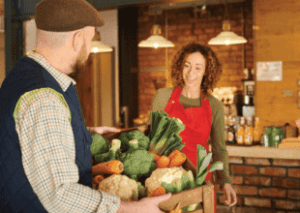
The frustrations of supply chain challenges may end up at the restaurant door, but producers, manufacturers and suppliers are feeling the pain, too. Building relationships with vendors and keeping communication open can help alleviate problems before they even happen. Plus, many suppliers – especially the larger ones – have resources on their websites with information about sourcing, availability and seasonal trends.
As a chef and owner, Metz knows firsthand the value of communicating with vendor-partners and the goodwill that comes from building relationships. During the pandemic, he even had company executives make deliveries in their own cars when there was a shortage of trucks.
His advice? “Listen to your vendors, and don’t blame it on them. After being flexible and listening, try to help them help you. You have to be fair to those folks. You’ve got to be able to look beyond yourself – be selfless when you’re in that situation.”
Communication doesn’t stop there. Supply chain issues trickle right down to the customer. “The first step in communicating with customers is to communicate with your staff about changes – especially your client-facing staff – so everybody is on the same page,” Hight says. “Hopefully, people will understand that everyone is doing the best they can.”
“We’ve really worked hard as an industry to communicate clearly,” says Metz. Our guests know what’s going on, and we try to get that message out” – whether it’s a menu item change or staff shortage.
From making menu modifications to changing which products are purchased and how they’re delivered, dealing with the impact of supply chain issues now tops the list in a long line of challenges. For the resilient restaurant owners and operators, there may not be a one-size-fits-all strategy, but finding creative solutions will, in time, be the bridge that gets the industry to the other side.



