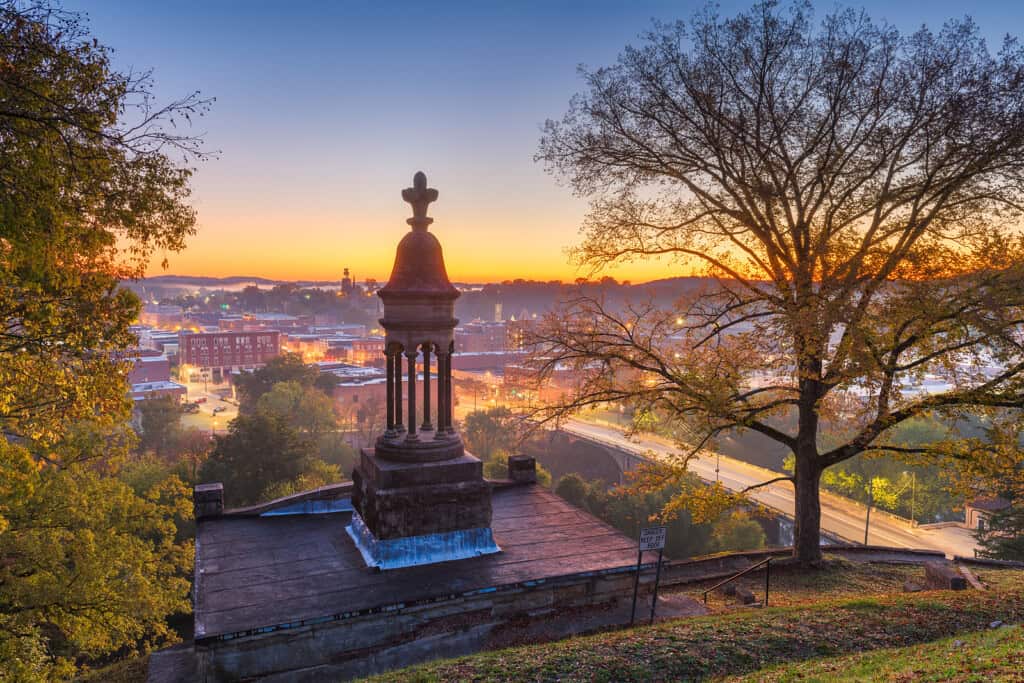
Cradled by the curves of the Etowah and Oostanaula Rivers in northwest Georgia sits Rome, a charming southern town where neoclassical architecture stands as a testament to its rich heritage and hospitality thrives. However, Rome is more than just a quaint city; it’s a place of transition and transformation.
Situated in the foothills of the Appalachian Mountains, Rome serves as a medical hub for Northwest Georgia, and that along with the presence of Georgia Northwestern Technical College and Berry College brings a steady stream of people to the area. It’s also only about an hour and a half drive from downtown Atlanta, so it’s also becoming a bedroom community to the state capital thanks to a greater acceptance of remote work or hybrid work-from-home set ups.
Flanked by larger cities like Gadsden, Chattanooga and Atlanta on all sides, the city of 38,000 people is a center point for both locals and tourists. But it’s not just the desirable location that’s leading to an expected population increase in the coming years but rather its relatively low cost of living, its reputation as an ideal place to live and raise a family, and recent onscreen and economic development success.
Rome, much like Atlanta and other parts of the state, offers various production companies an idyllic setting for filming. Most recently, Rome was the site for Stranger Things’ season 4 Creel House, but it has been the location for many hits, including Remember the Titans and Black Widow.
Plus, the recent significant investment in the SK On/Hyundai EV battery plant in Bartow County, just a short drive from the city off Route 411, has ignited a spark of optimism. The $5-billion plant, set to complete construction in 2025, promises to bring substantial economic benefits to the region, including $40 million a year in tax revenue and over 3,000 new jobs.
The anticipation of population growth is palpable, but what does it mean for the restaurant scene? It’s a recipe for potential and opportunity.
With an influx of new residents and an increase in visitors on the horizon, Rome’s restaurant community can expect a growing customer base and more dining experiences. As the saying goes, “if they build it, they will come.” Or, as Justin Shepard, one of the owners of River Remedy Brewing Company, says, “There’s going to have to be an increase in restaurants and bars to keep up.”
Shepard opened River Remedy during the pandemic following the close of Rome’s only other brewery, Rome City Brewing, in late 2020. The brewery has 13 types of alcohol including beer, wine, mead, cider and seltzers and donates a portion of every pint sold to local charities, including the Rome international Film Festival and Trails for Recreation and Economic Development (TRED), as a way to give back to the community.
Local establishments will need to branch out, innovate and diversify to meet the burgeoning demand. Shepard says they already have plans to move River Remedy. Currently, River Remedy has indoor and outdoor seating that accommodates a crowd, but when it hosts live music and trivia nights, it could use more space. Shepard says he has eyes on an old cotton mill building roughly seven times the size of their current space where they can not only become a venue for ticketed events but have enough space to host a good many customers and their brewing equipment.
Other restaurateurs, like Eric Tant, saw potential in Rome and acted on this intuition in 2020, opening John Henry’s Grill and Melinda’s Southern Coastal Kitchen on Broad Street. At John Henry’s Grill, Tant focuses on elevating comforting classics. Instead of creamed corn and mac n’ cheese, Tant offers jasmine corn risotto and smoked gouda macaroni and cheese. In addition to these dishes, the restaurant has filets, ribeyes and a salad bar that Tant has no plans of doing away with because of how much the customers love it.
Complementing the steakhouse vibe of John Henry’s, Tant opened Melinda’s Coastal Southern Kitchen in a smaller space next door that’s reminiscent of a warm household kitchen and named after his mom. Tant wants the ingredients at Melinda’s to speak for themselves, and the menu rotates frequently. Melinda’s also hosts bourbon and wine tastings once a month that are paired with a unique prix fixe menu. Although different in food and atmosphere, Tant’s goal for both restaurants is the same: to use high-quality ingredients that inspire others to explore new flavors and cuisine.
 Zana and Eddie Hasko, the owners of Bella Roma Grill, have been pivoting and experimenting with their menu to meet demands and cater to customers for years. Eddie Hasko had always dreamed of one day owning a restaurant, a place where he could combine his prior foodservice experience with what he had absorbed during his travels in Albania, Greece and Italy. So when the Haskos settled in Rome, they decided to open Bella Roma in Armuchee near Berry College, where Zana worked at the time.
Although it has since moved across the street from the Rome Braves Minor League Baseball field, Bella Roma still attracts the college’s faculty, staff and students while also gaining a loyal following of locals and an influx of new customers thanks to the Rome Tennis Center.
Since Zana is from Albania and Eddie lived in Italy for some time, Bella Roma focuses primarily on Italian cuisine but features some Mediterranean favorites, like a gyro plate and chicken souvlaki.
“We have experimented with many different foods as well as tastings that we received lots of feedback on for what customers did and didn’t like,” the Haskos say. “Over the years, we adapted to the tongue of our customers and regulars.”
Much like Shepard and Tant, the Haskos see the need for new restaurants and the expansion of culinary offerings in Rome in the wake of a population surge. However, they’re wary this growth will bring in more fast-food franchises than local concepts, which is a problem the pair already faces.
“The chain restaurants are challenging to us and other family-owned restaurants because they have access to much higher marketing, better locations, and are well-known by everybody,” says Eddie Hasko.
While fast-food and other chain restaurants bring new jobs to small communities, they often do so at the expense of smaller, local establishments. These franchises have the financial resources to saturate the market with multiple locations, making it a challenge for independent, locally owned restaurants to compete.
Chain restaurants aren’t the only concern. Brewers like Shepard, breweries and other beverage-centric establishments looking to sell their product to restaurants have a hard time finding and creating favorable relationships with distributors.
“The next thing I’ve been trying to get is self-distribution, where I could take my case down to a local restaurant and sell it to them directly as opposed to having a middleman that would pick it up from me, drive it to Atlanta, and then drive it back up here and sell it to the bar next door,” says Shepard. “It’s extremely inefficient for the distributors. It took me almost nine months to even find a distributor that would let me have my beer downtown because it’s not worth their time.”
In addition to chains and distributing, there’s been an issue in finding space for new developments. Even though Shepard has plans for another location, he says it’s been a nightmare trying to find a place with the current market for housing and commercial properties.
“We have a spot in mind but nothing written,” he says. “Contract work is still difficult to get ahold of, too, because they’re all still building out these houses from everybody moving.”
Despite the potential for growth and the challenges restaurateurs currently face in Rome, there’s a prevailing sense of unity among the city’s existing restaurants rather than competition.
“Since Rome is a very small town, everyone here knows everybody. Like Bella Roma, there have been many other restaurants that have grown with the city and gotten to know their customers,” says Eddie Hasko. “I have been here since ’97 and have been able to build lots of strong connections and friendships through the restaurant.”
In the face of such challenges and emerging opportunities, Rome’s restaurant community stands united, embodying a distinctive camaraderie that transcends competition, creating a welcoming environment for the city’s burgeoning development.



