By Nancy Wood
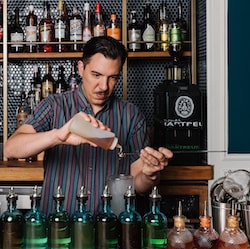 Miles Macquarrie
In a lot of restaurants, becoming a bartender requires a little experience and maybe some special instruction on mixing a few signature cocktails. But if you want to bartend at one of metro Atlanta’s most highly regarded bars, you’ll need patience. For Miles Macquarrie, co-owner and beverage director at Kimball House and Watchman’s, it takes time to gain a spot behind the bar. “It takes at least six months,” says the six-time James Beard nominee for Outstanding Bar Program, “and typically closer to a year.” Since Macquarrie hires from within, rising to bartender means starting as a server.
“There are so many other things to learn on the hospitality side and the operations side,” he says. “We want to make sure they’re well equipped to do all of the other things before we have them do the additional things behind the bar.”
Before Kimball House opened six years ago, Macquarrie and his partners determined what their training process would look like, pulling from other resources, looking at employee training guides and watching service at other restaurants to see what they liked and didn’t like. “We constantly talked about it,” he says. The team then created an application with some very specific questions, including some about wine, beer and liquor, which helps them identify employees who are the right fit. (An example? “What is absinthe?”)
Macquarrie’s approach to training differs from more structured programs. Servers even go through a stage or a working interview before being hired. Once they’re hired, they spend a week training under the watchful eyes of senior servers and management – and there are no written tests. He and his partners believe that training is a constant learning process. “We don’t want it to feel corporate,” he says. “We’ll test them in the moment and listen to what they say at their tables. It’s all real-world training.”
Once a server has been working for at least six months, “They already know so much about our systems that they can really focus on drink recipes and technique and the difference behind the bar vs. on the floor,” he says. The first step is working with actual bartenders during a shift. They start at the drink station or “taps” – pouring beer and wine, and more importantly, managing the service side. “It’s a lot to juggle,” Macquarrie says, “keeping up with the tabs, knowing the other bartenders’ needs and restocking glassware in the freezer.”
Once they’ve mastered that, training in the cocktail well begins. “We have sets for all of our classics,” he explains, “and a rigorous technique training.” Drinks are tested with thermometers to make sure they are cold enough, plus, he says, “We look at their ice cubes after they shake to make sure they’re texturing them correctly and not breaking up their ice too much – all the things that go into the drink-making process. “It’s a long, slow build at our place,” he says, “and we’ve had great results from it, because people know what’s expected by the time they get to beverage service.”



